
The academic careers field guide
Half of an academic career is doing good work. The other half is making sure the right people know the work exists, and almost nobody is trained for it. This series walks what the peer-reviewed literature actually says about how recognition works, then turns it into tactics you can act on this week. It is the serialized version of the Loud Camel field guide. You can also read the whole thing as a single PDF: the handbook.
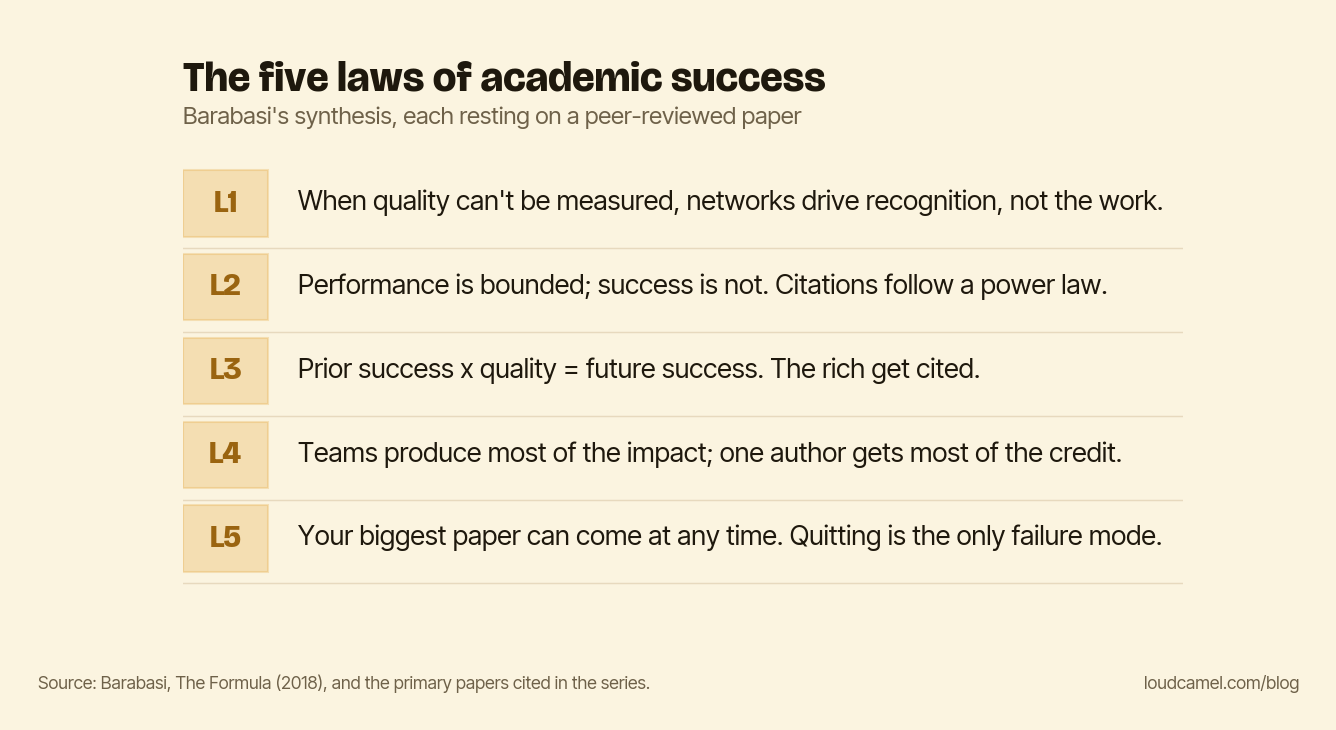
How academic careers actually work
Nobody trains you for the half of academic work that decides your career: making sure the right people know your work exists. Here is why that is a feature of the system, not a bug, and the fourth way to respond to it.
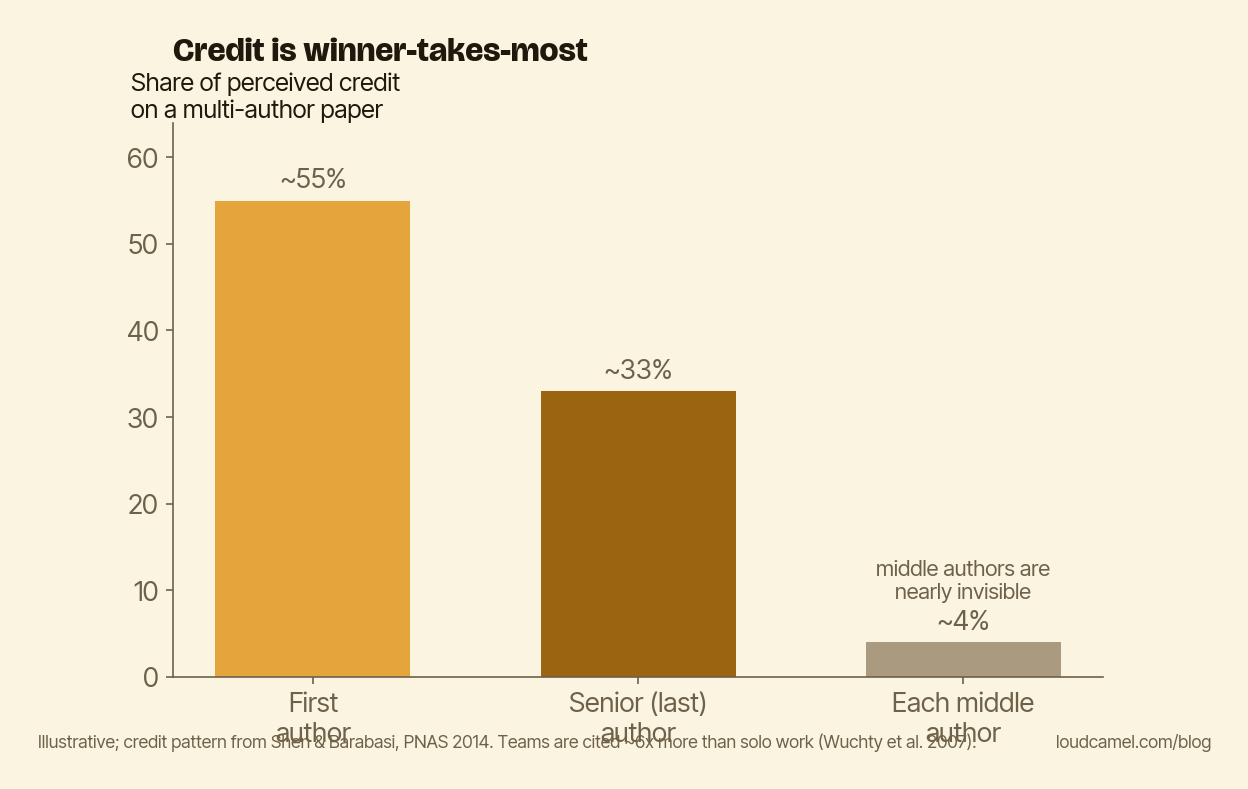
The credit problem in team science
Teams produce most of the research impact, but one author takes most of the credit. If you are a middle author, the publication itself will not make your contribution visible. Here is what to do about it.
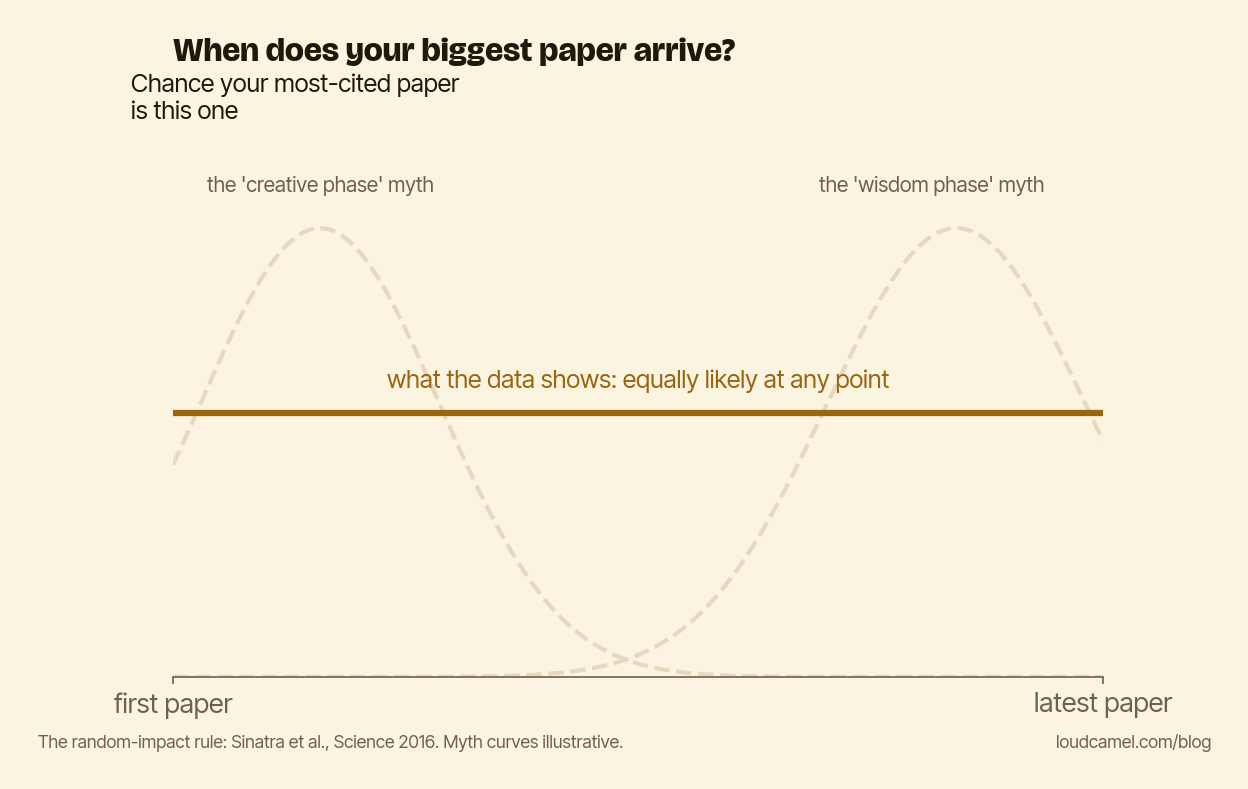
Why your biggest paper hasn't happened yet
The single biggest paper of a scientific career lands at a random point in it, and the only requirement is that you were still publishing when it arrived. Here is why that means you should not quit.
Post the preprint
Preprints get cited earlier and, in many fields, more. The reflex to wait until acceptance is quietly costing you citations. Here is how to stop, and the version cadence that turns one paper into three citation events.
The plain-language summary, and how to write one
A 200-word plain-English summary of your paper is the highest-value writing you can do this year. It is the version LLMs quote, reviewers skim, and journalists paraphrase. Here is how to draft one in five minutes.
Email the people whose work you cited
Every paper ships with a built-in list of 30 to 60 people who already care about your topic: the authors you cited. Almost nobody emails any of them. Here is how, and the template to do it.
Show up where the conversation is
Two low-effort habits that compound into lasting academic visibility: answer one public question a month where your sub-sub-field actually asks them, and give the same sharp talk many times instead of writing a new one each time.
Make your work findable by machines
If your paper doesn't surface when ChatGPT, Perplexity, or Google AI Overviews are asked about your topic, it doesn't exist for a growing share of your future citers. Profile hygiene fixes that in an afternoon.
This field guide is from Loud Camel, which runs the recurring half of this work for researchers: surfacing new scholars, dormant contacts, and outreach drafts on a schedule. It never sends anything on your behalf.