
Tag
ai search
15 posts tagged ai-search.
-
Who else is on your Google Scholar profile?
A practical guide to cleaning up your Google Scholar profile: remove a namesake's papers, add back your own missing or split records, and fix attribution so search and AI credit the right author.
-
A reviewer looks you up before they score you. What do they find?
Grant and fellowship reviewers look you up mid-review. Run this pre-submission visibility check: does your best work surface for their query, is your Scholar profile disambiguated, and does your own page block the AI they ask?
-
The 20-minute visibility self-audit (no tools, no dashboard)
A do-it-yourself, four-check visibility audit any researcher can run in twenty minutes: what ChatGPT and Perplexity say about you, whether Google Scholar merged your records, and whether your pages block AI crawlers.
-
How does your work end up cited on Wikipedia? Not by you.
Getting cited on Wikipedia is an AI-visibility asset, because Wikipedia is one of the most heavily weighted sources behind large language models. But you can't add your own work: self-citation is a conflict of interest. The way to get there runs through other editors.
-
Make your work findable by machines
If your paper doesn't surface when ChatGPT, Perplexity, or Google AI Overviews are asked about your topic, it doesn't exist for a growing share of your future citers. Profile hygiene fixes that in an afternoon.
-
Your preprint is live. That is not the same as being read
Preprints are linked to roughly 36% more citations and 49% more online attention, but those studies are observational. Here is why posting is not the same as being read, and what actually closes the gap: findability.
-
Show up where the conversation is
Two low-effort habits that compound into lasting academic visibility: answer one public question a month where your sub-sub-field actually asks them, and give the same sharp talk many times instead of writing a new one each time.
-
Optimizing Research for AI Search Engines (GEO for Academics)
Learn how Generative Engine Optimization (GEO) works for academic publishing. Discover how to structure your papers so AI tools like Perplexity, Elicit, and Google AI cite you first.
-
The plain-language summary, and how to write one
A 200-word plain-English summary of your paper is the highest-value writing you can do this year. It is the version LLMs quote, reviewers skim, and journalists paraphrase. Here is how to draft one in five minutes.
-
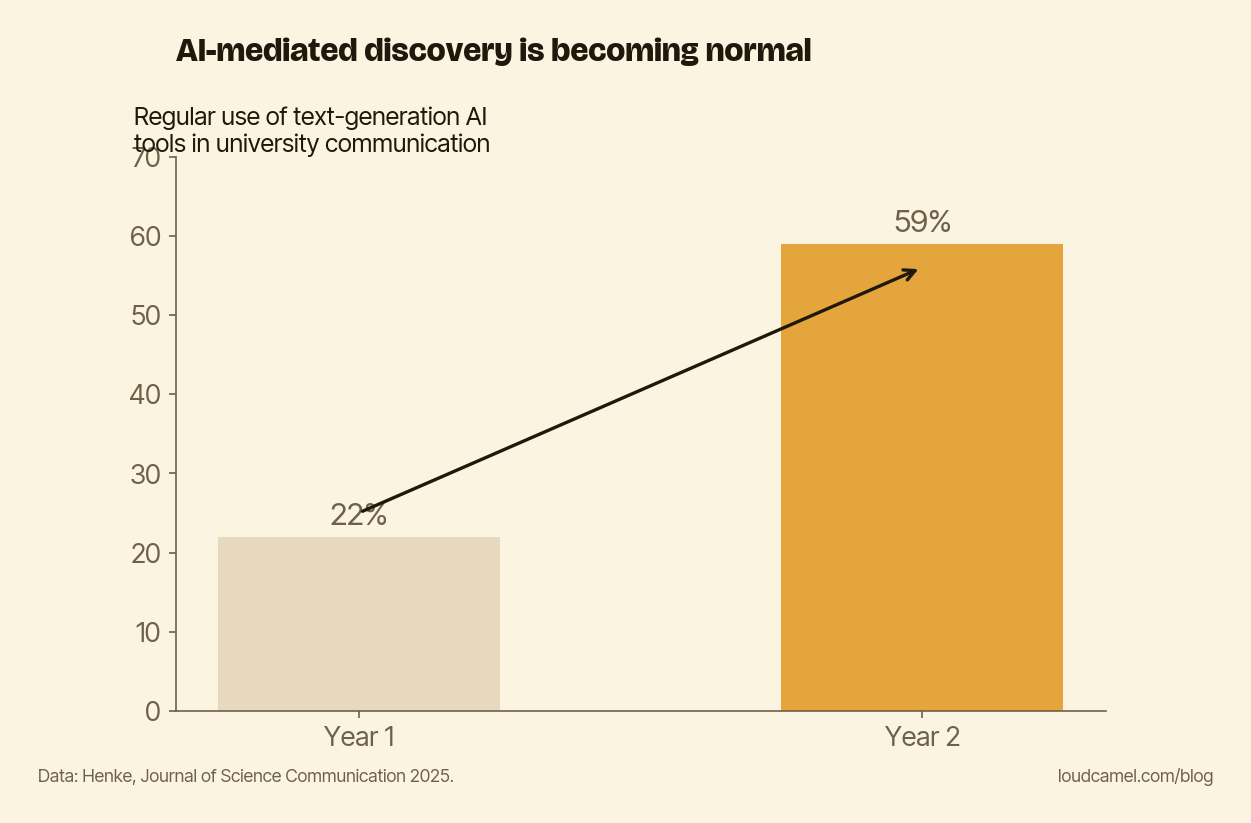
What AI search actually sees when it looks for your work
Discovery is shifting to AI assistants that can only surface text they can parse. Here is how to check whether your research shows up, and how to fix it if it doesn't.
-
The Best AI Platform for Research Visibility
Looking for the best AI platform for research visibility? Compare automated discovery layers, agentic networking assistants, and legacy profile repositories.
-
How AI Can Increase Academic Citations
Discover how AI-powered research distribution and Generative Engine Optimization (GEO) can dramatically increase your academic citations and h-index.
-
Best AI Tools for Academic Researchers
Discover the best AI tools for researchers in 2026, including platforms for literature review, visibility, citation growth, and academic productivity.
-
How to Increase Research Visibility in 2026
Learn how researchers can increase visibility, citations, and academic impact using AI-driven distribution and modern research promotion strategies.
-
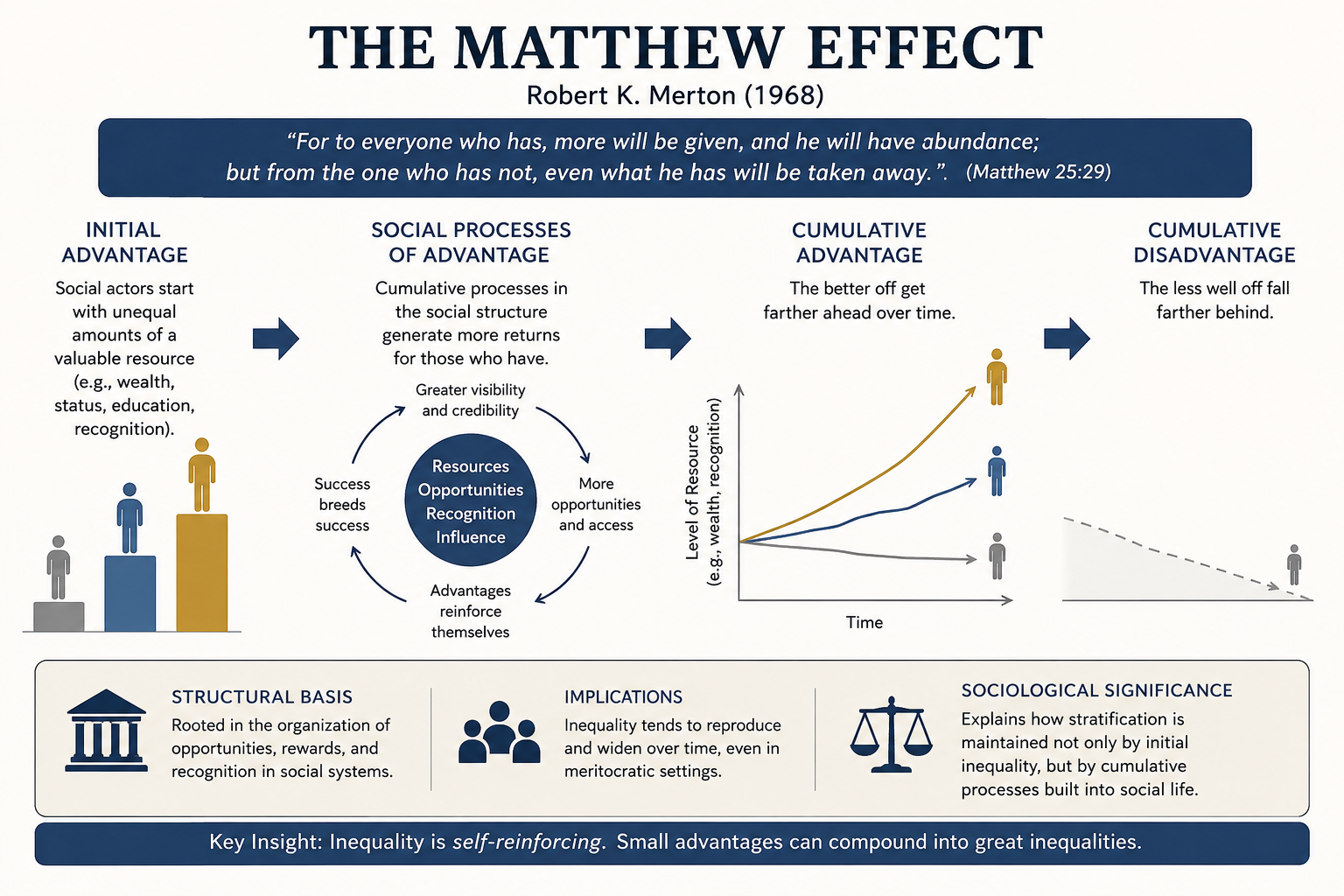
LLMs sharpen the Matthew effect in citations
LLMs asked to suggest references favor already-highly-cited papers, reproducing the Matthew effect in citations. Treat the first references a model suggests as a starting list, not the final one.