
Tag
research metrics
15 posts tagged research-metrics.
-
Does your PhD's pedigree decide your career more than your papers do?
A 2022 Nature study of 238,676 professors finds 80% trained at just 20% of universities, five schools produced one in eight, and only 5 to 23% ever work somewhere more prestigious than their PhD. What that means if you didn't train at an elite school.
-
Does a career grant actually stop brain drain?
A 2025 Quantitative Science Studies paper, the first to test the question, finds the Marie Curie Career Integration Grant raised long-term relocation odds by about 8 to 9%, mostly for researchers with the fewest other options.
-
Why do some papers keep getting cited, and most don't?
A January 2025 preprint argues papers keep getting cited less because of intrinsic quality and more because of where their research community's attention drifts, explaining sleeping beauties that rich-get-richer models cannot.
-
Does crossing fields make your paper more disruptive, or just harder?
A 2025 Journal of Information Science study of 38 million papers finds interdisciplinary work links to higher disruptive potential on average, even as disruption fell while interdisciplinarity rose, with an uneven payoff across fields.
-
The 20-minute visibility self-audit (no tools, no dashboard)
A do-it-yourself, four-check visibility audit any researcher can run in twenty minutes: what ChatGPT and Perplexity say about you, whether Google Scholar merged your records, and whether your pages block AI crawlers.
-
Is the paper you're reading even real?
A November 2025 Royal Society Open Science Perspective, the Stockholm Declaration, argues fake and low-quality science is now produced at industrial scale, with hundreds of thousands of paper-mill articles a year.
-
Is the 'world's top 2% scientists' list measuring merit or geography?
A 2025 Journal of Informetrics study of Stanford's 'World's Top 2% Scientists' list in legal studies finds it tracks a US postal code about as closely as it tracks merit.
-
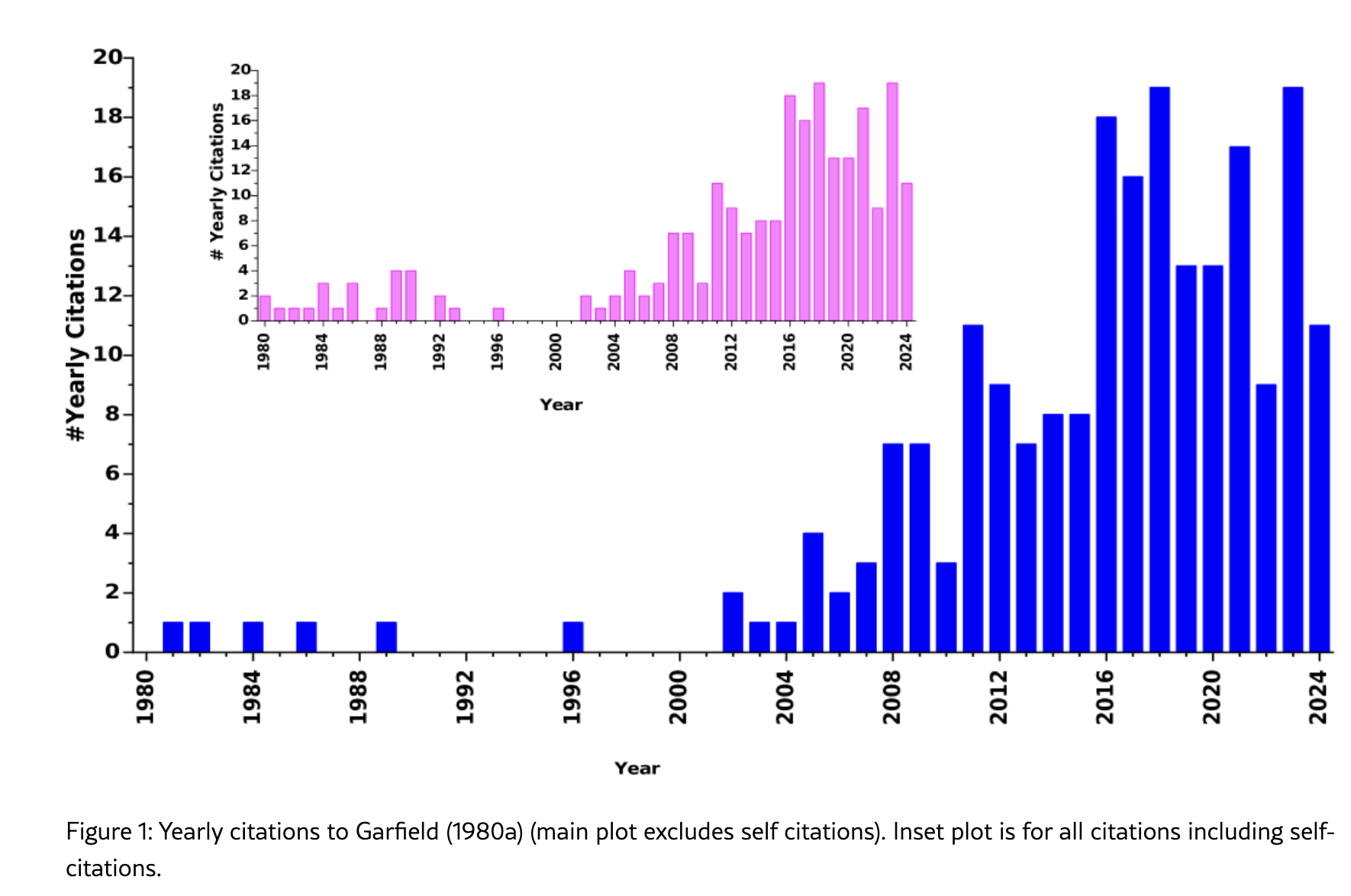
The man who studied delayed recognition, and then suffered it
Eugene Garfield coined 'delayed recognition' for papers the world ignores for years. A 2025 preprint shows his own paper on it sat almost uncited for 28 years.
-
Is your hot streak also your most disruptive streak?
A 2025 study of 21,271 economists finds papers published during a researcher's hot streak are also more disruptive, and the boldest work tends to arrive years before the most-cited work.
-
Small teams disrupt? Maybe it was never about size
A new arXiv preprint argues that collaboration synergy, not team size, drives disruptive science, revisiting the well-known 'small teams disrupt, large teams develop' finding.
-
Is science really running out of disruption?
A 2026 Research Policy paper argues the famous 'science is becoming less disruptive' finding measures the wrong thing, especially in the social sciences.
-
Best Platforms to Track Research Impact
Compare the best platforms to track research impact, from traditional citation trackers to real-time altmetric engines and proactive distribution systems.
-
How Researchers Can Increase h-index Faster
Learn how to increase your h-index faster using a targeted distribution strategy that focuses directly on your publication tipping points.
-
Altmetrics vs Citations: What Matters More?
Altmetrics vs citations: what each one measures, how skewed altmetric attention really is by field, how funders read it, and how to optimize for both.
-
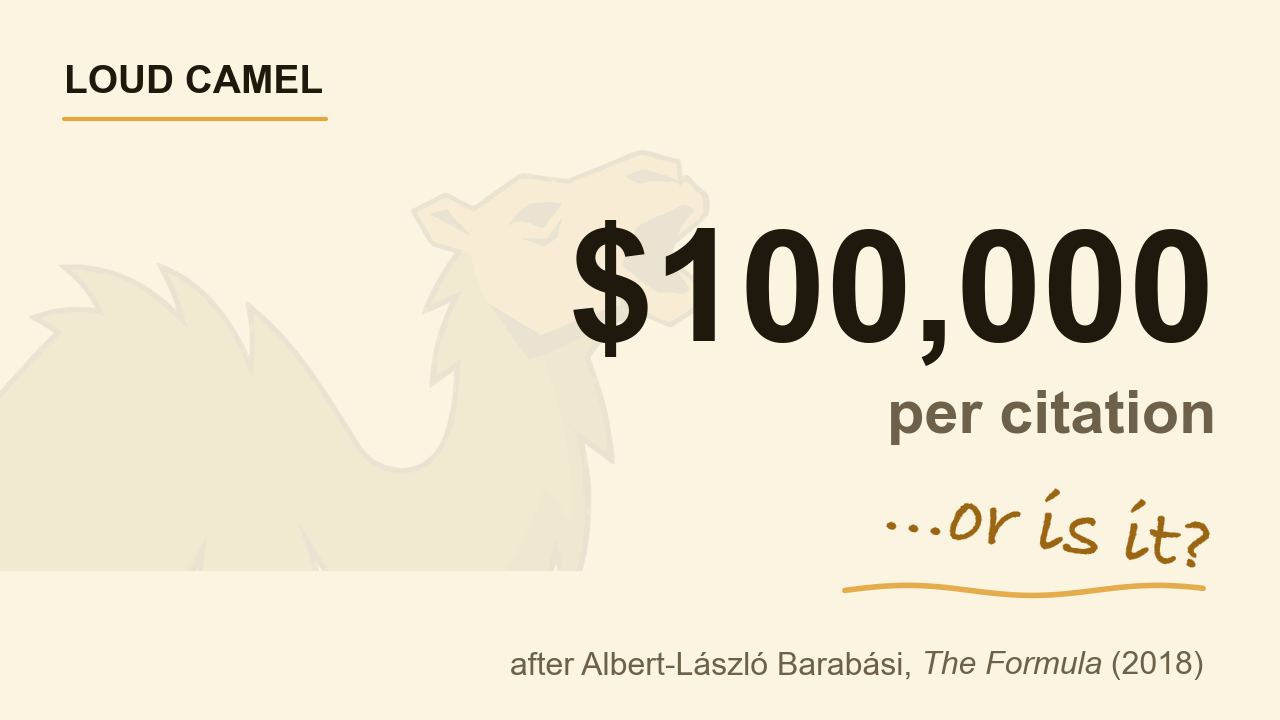
Where is my $400,000?
Barabási's The Formula prices a citation at about $100,000. That number is an average over a power-law distribution, so most citations are worth far less and a few are worth fortunes. What your next citation is worth depends on where you sit.