
Tag
science of science
20 posts tagged science-of-science.
-
Does your PhD's pedigree decide your career more than your papers do?
A 2022 Nature study of 238,676 professors finds 80% trained at just 20% of universities, five schools produced one in eight, and only 5 to 23% ever work somewhere more prestigious than their PhD. What that means if you didn't train at an elite school.
-
What does a great mentor actually give you? (Not their topic.)
A 2020 PNAS study of nearly 40,000 scientists finds a great mentor's biggest gift is a tacit skill for creating and communicating important research, and that protégés who copy their mentor's topic do worse than those who strike out on their own.
-
Should a language model review your paper?
A 2025 preprint by Sebastian Porsdam Mann and colleagues argues large language models should take over narrow, supervised parts of peer review, and stay away from the human judgment that makes it legitimate. My take, with a preprint's caveats.
-
Does a career grant actually stop brain drain?
A 2025 Quantitative Science Studies paper, the first to test the question, finds the Marie Curie Career Integration Grant raised long-term relocation odds by about 8 to 9%, mostly for researchers with the fewest other options.
-
Why do some papers keep getting cited, and most don't?
A January 2025 preprint argues papers keep getting cited less because of intrinsic quality and more because of where their research community's attention drifts, explaining sleeping beauties that rich-get-richer models cannot.
-
Does crossing fields make your paper more disruptive, or just harder?
A 2025 Journal of Information Science study of 38 million papers finds interdisciplinary work links to higher disruptive potential on average, even as disruption fell while interdisciplinarity rose, with an uneven payoff across fields.
-
Is the paper you're reading even real?
A November 2025 Royal Society Open Science Perspective, the Stockholm Declaration, argues fake and low-quality science is now produced at industrial scale, with hundreds of thousands of paper-mill articles a year.
-
Is your hot streak also your most disruptive streak?
A 2025 study of 21,271 economists finds papers published during a researcher's hot streak are also more disruptive, and the boldest work tends to arrive years before the most-cited work.
-
Small teams disrupt? Maybe it was never about size
A new arXiv preprint argues that collaboration synergy, not team size, drives disruptive science, revisiting the well-known 'small teams disrupt, large teams develop' finding.
-
Is science really running out of disruption?
A 2026 Research Policy paper argues the famous 'science is becoming less disruptive' finding measures the wrong thing, especially in the social sciences.
-
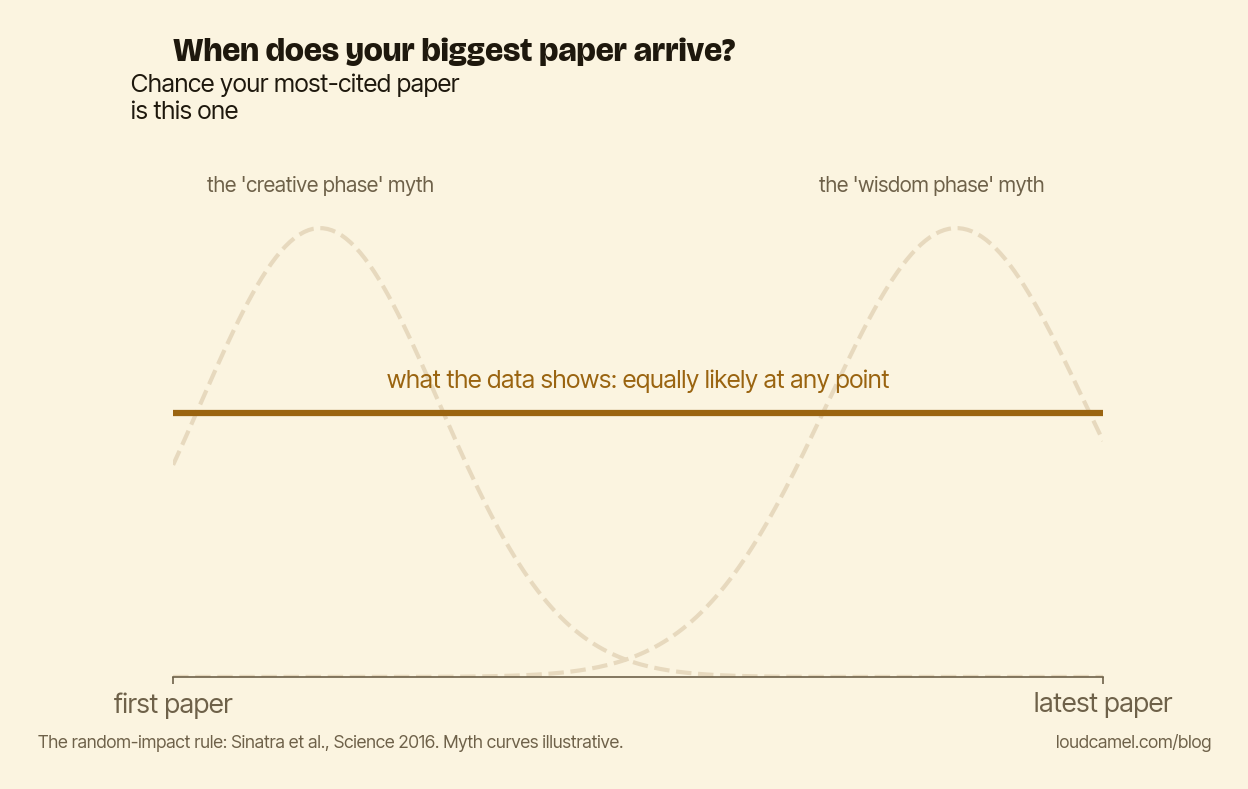
Why your biggest paper hasn't happened yet
The single biggest paper of a scientific career lands at a random point in it, and the only requirement is that you were still publishing when it arrived. Here is why that means you should not quit.
-
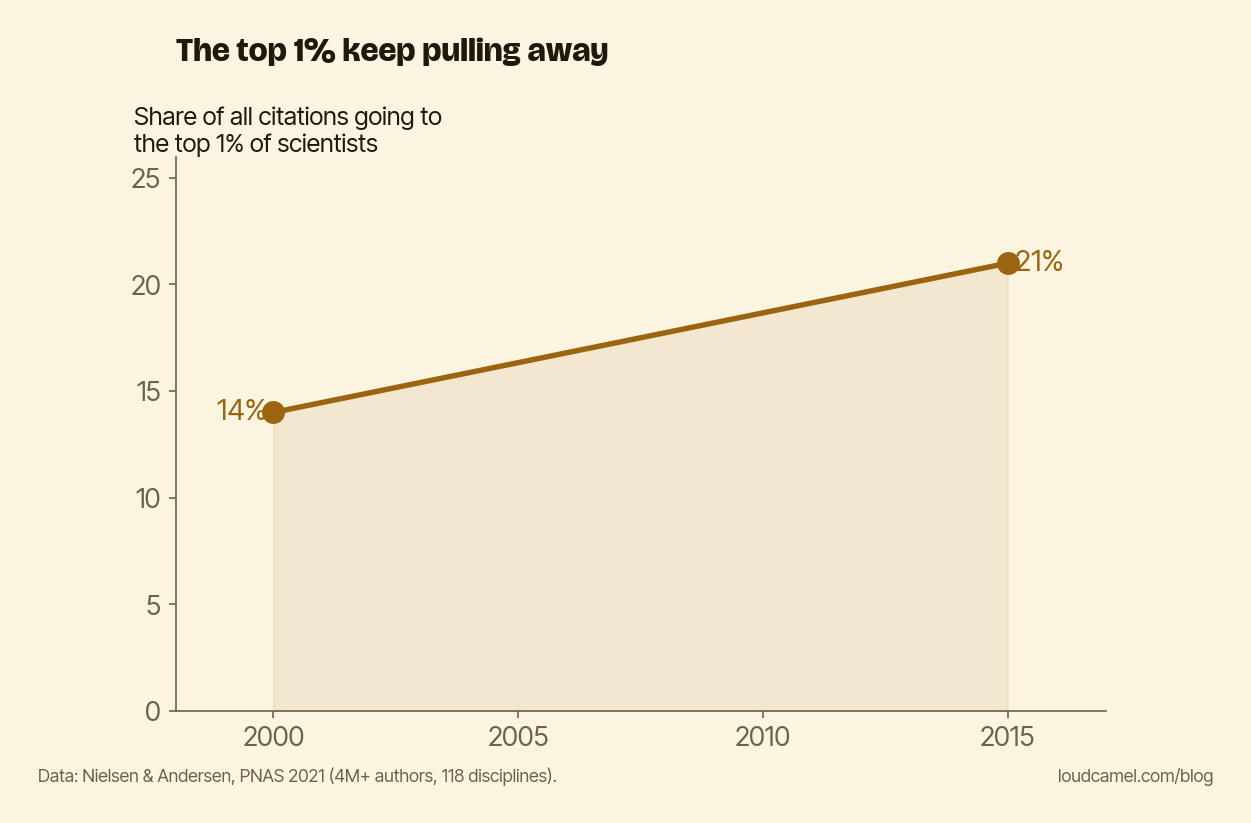
Citation inequality is widening, which is why 'above average' isn't the target
By 2015 the top 1% of scientists captured 21% of all citations, up from 14% in 2000. As attention concentrates, being good enough guarantees nothing. Here is why deliberate visibility matters more every year.
-
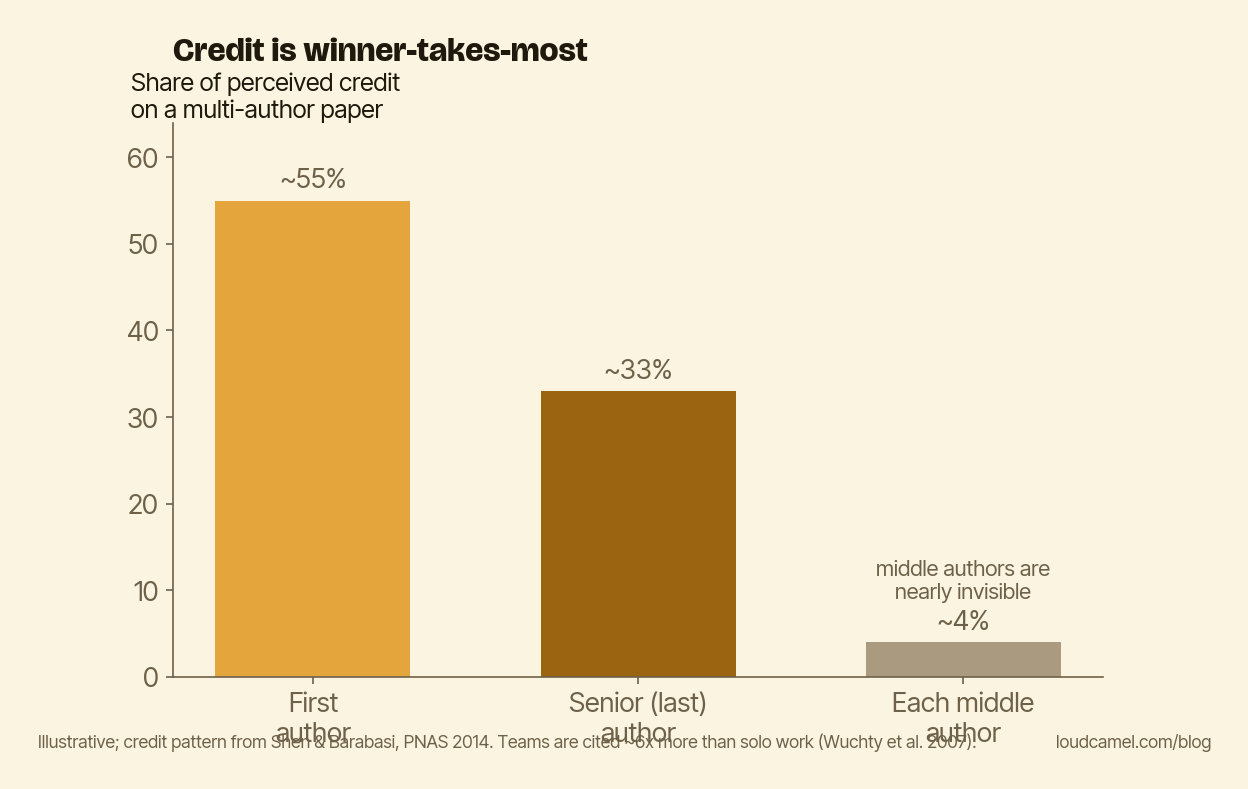
The credit problem in team science
Teams produce most of the research impact, but one author takes most of the credit. If you are a middle author, the publication itself will not make your contribution visible. Here is what to do about it.
-
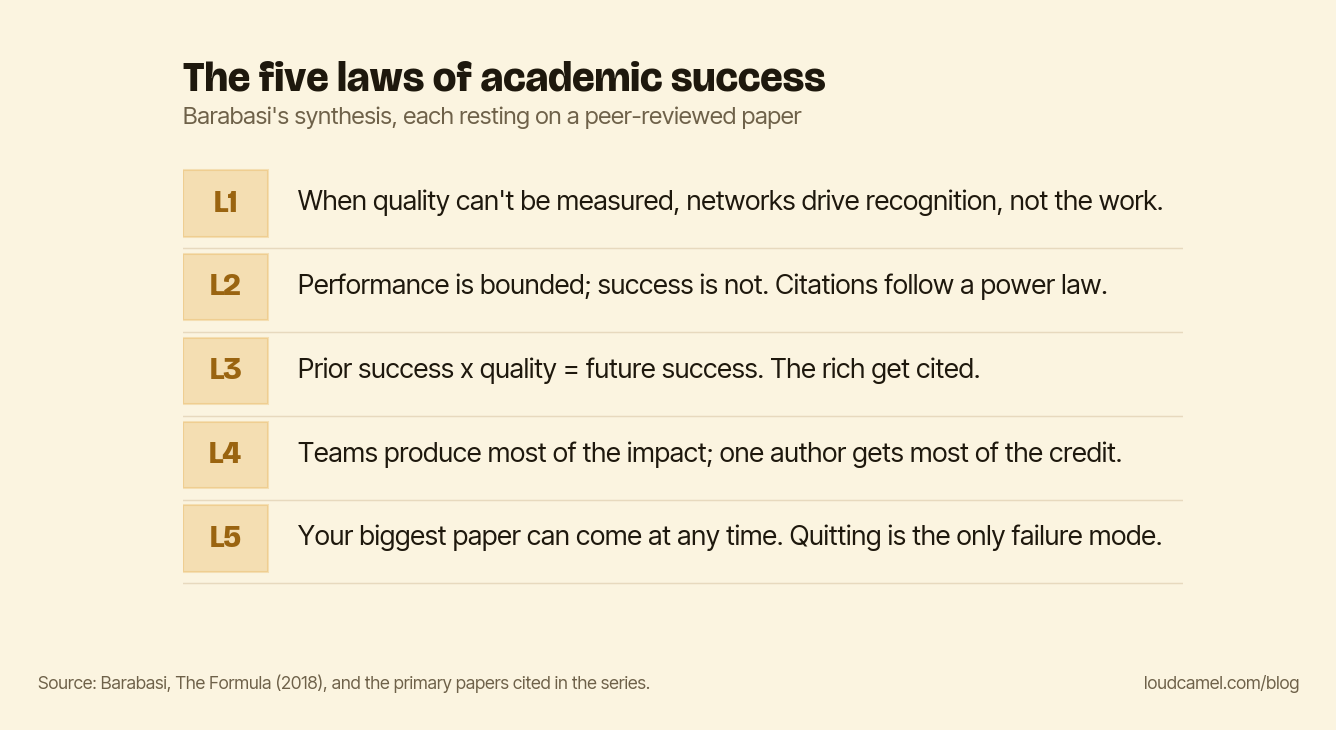
How academic careers actually work
Nobody trains you for the half of academic work that decides your career: making sure the right people know your work exists. Here is why that is a feature of the system, not a bug, and the fourth way to respond to it.
-
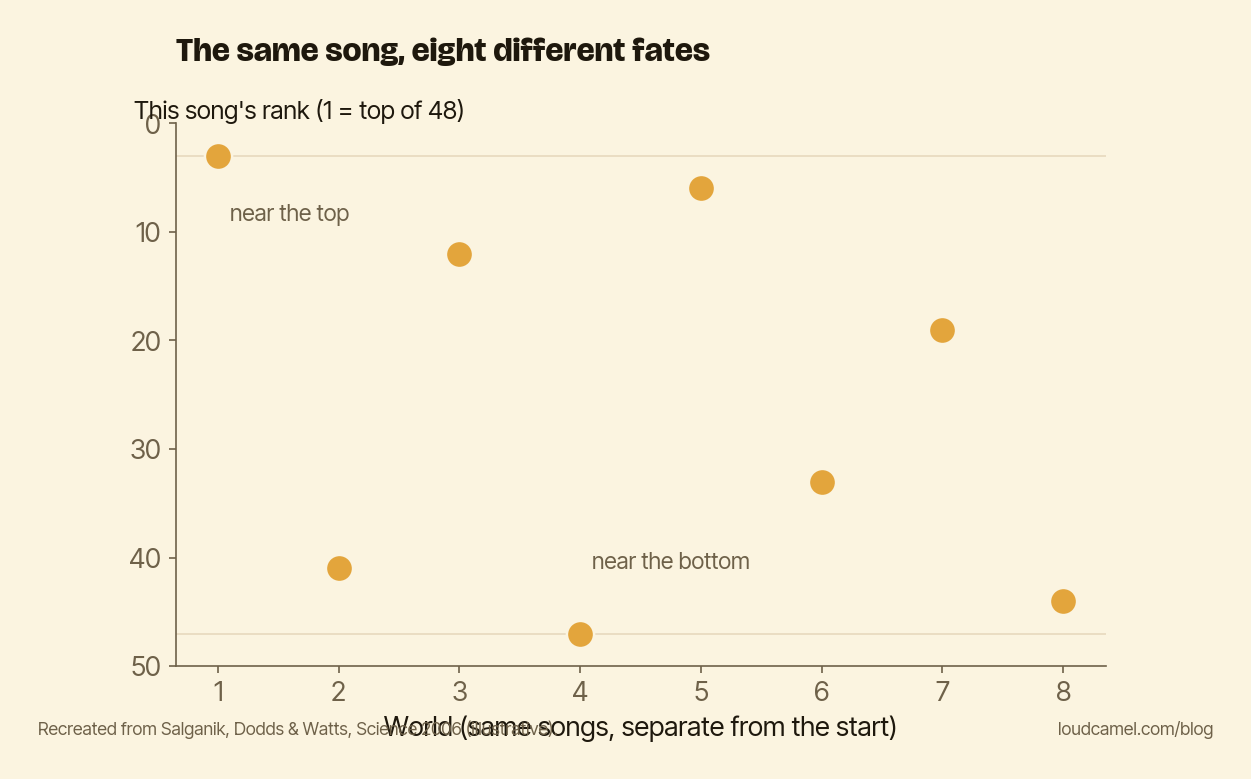
Same song, different universe: what a music experiment says about your citations
A 2006 music experiment ran the same songs through eight parallel worlds. The same track was a hit in one and a flop in another. Here is what that says about why some papers get cited and others vanish.
-
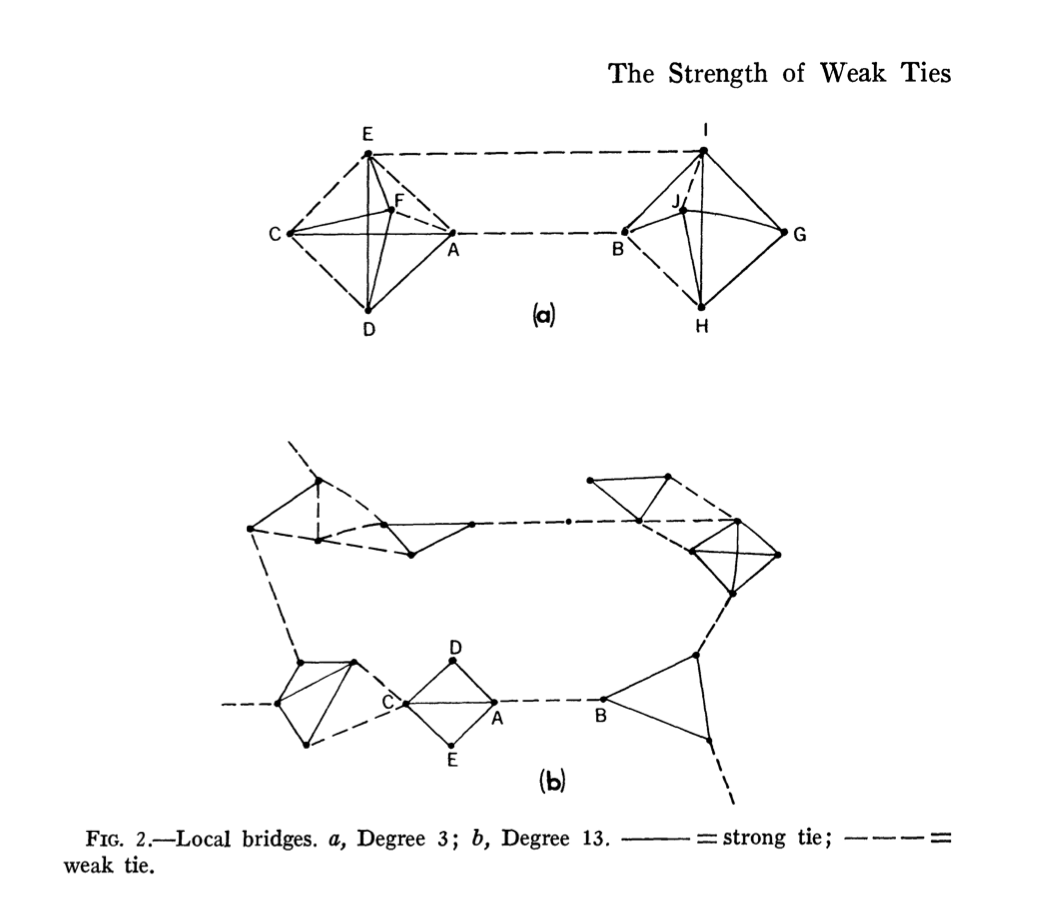
Why your acquaintances, not your closest friends, bring you the next opportunity
Granovetter's 'strength of weak ties': most useful job leads come from acquaintances you see rarely, not your closest circle. How to put yourself near the next opportunity.
-
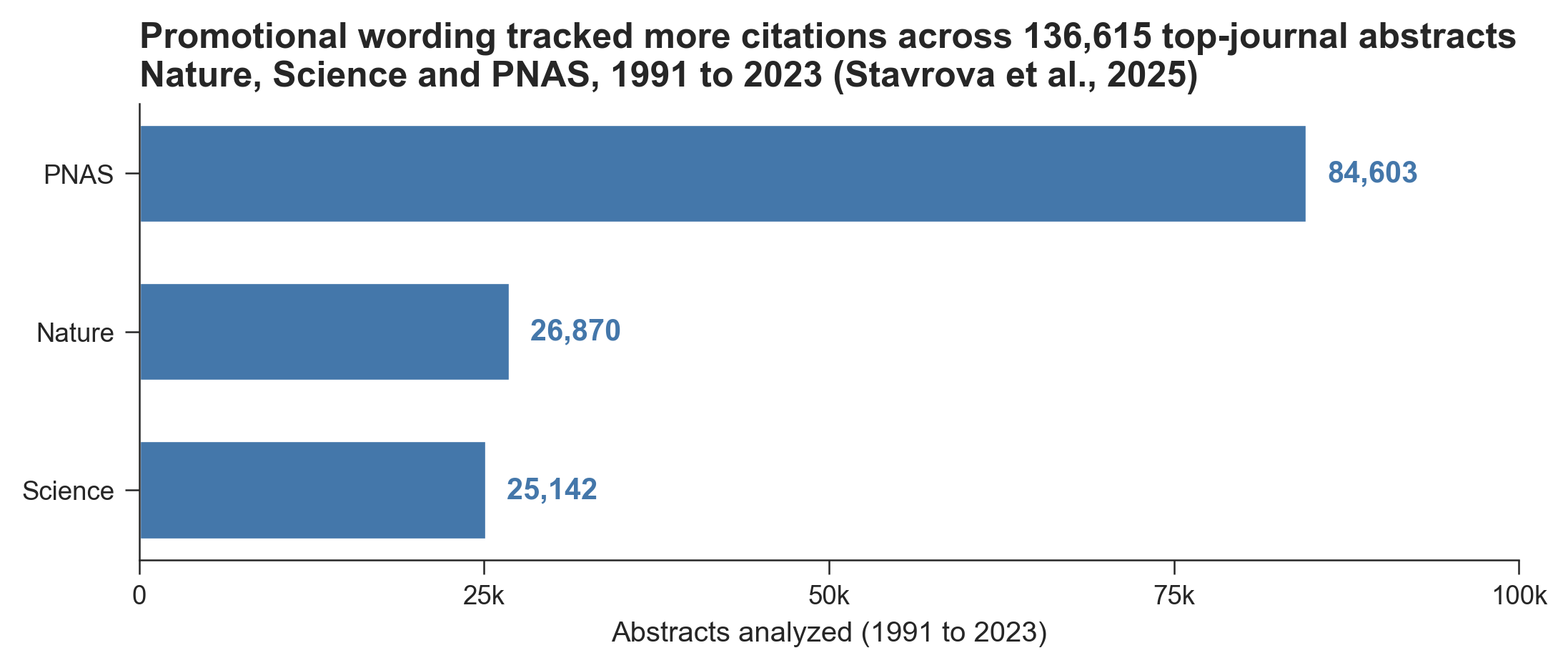
Why the wording of your abstract affects how often you get cited
A 136,615-paper study found that abstracts with more promotional language drew more citations, views, and media coverage — even within Nature, Science, and PNAS.
-
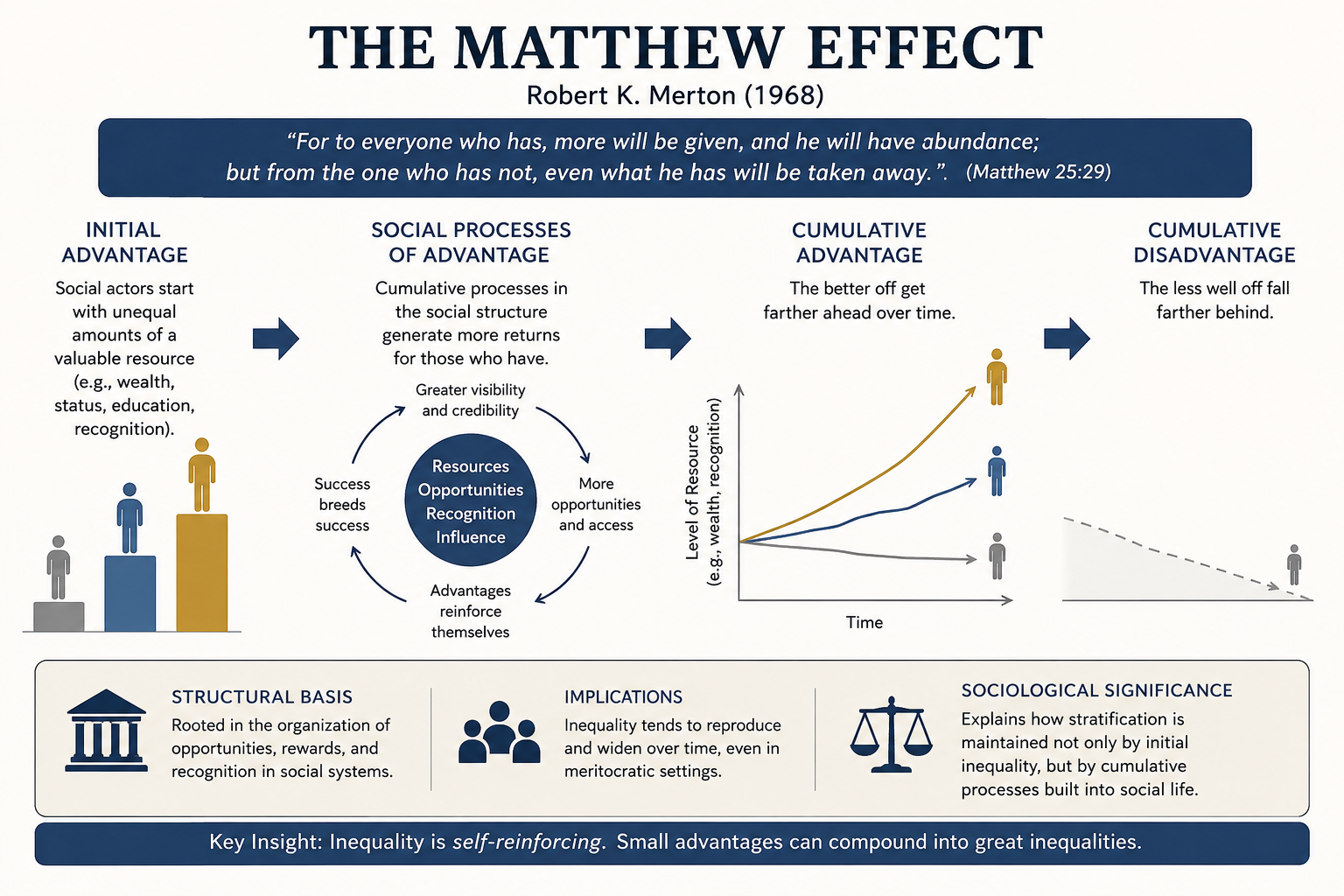
LLMs sharpen the Matthew effect in citations
LLMs asked to suggest references favor already-highly-cited papers, reproducing the Matthew effect in citations. Treat the first references a model suggests as a starting list, not the final one.
-
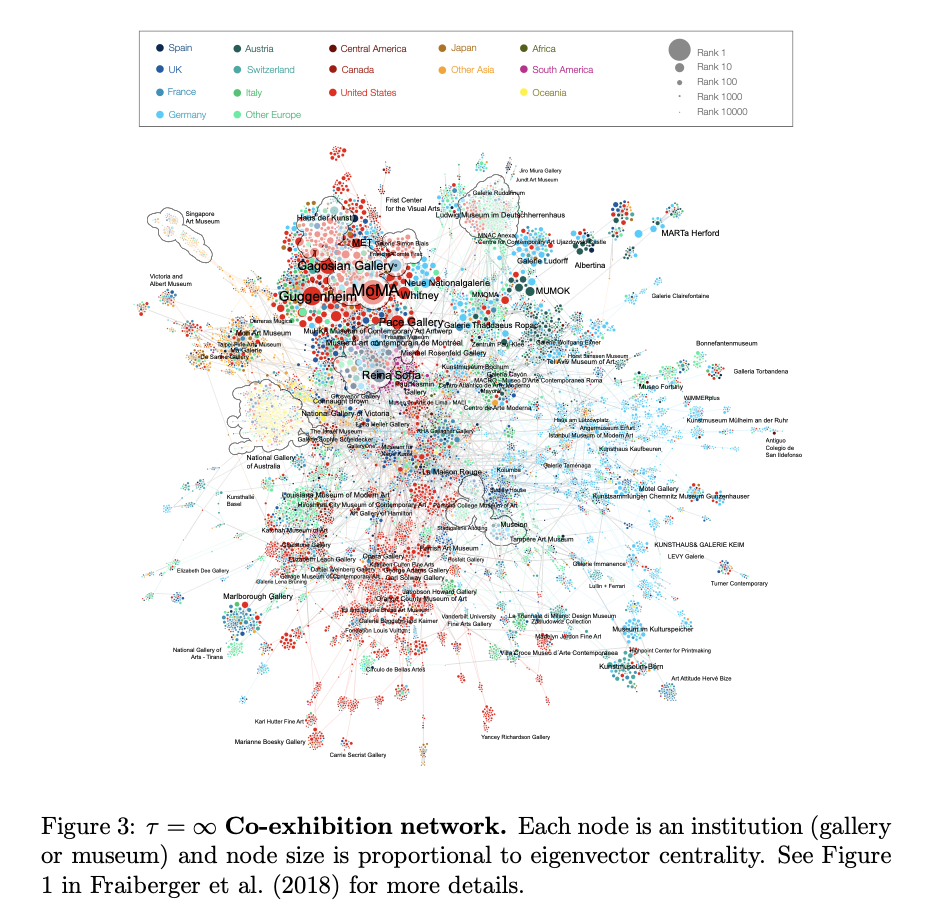
Where you debut probably decides where you stay
A network study of nearly 500,000 artists shows the first five exhibitions predict the next thirty. The same gatekeeper dynamics shape any institutional career — choose your first move carefully.
-
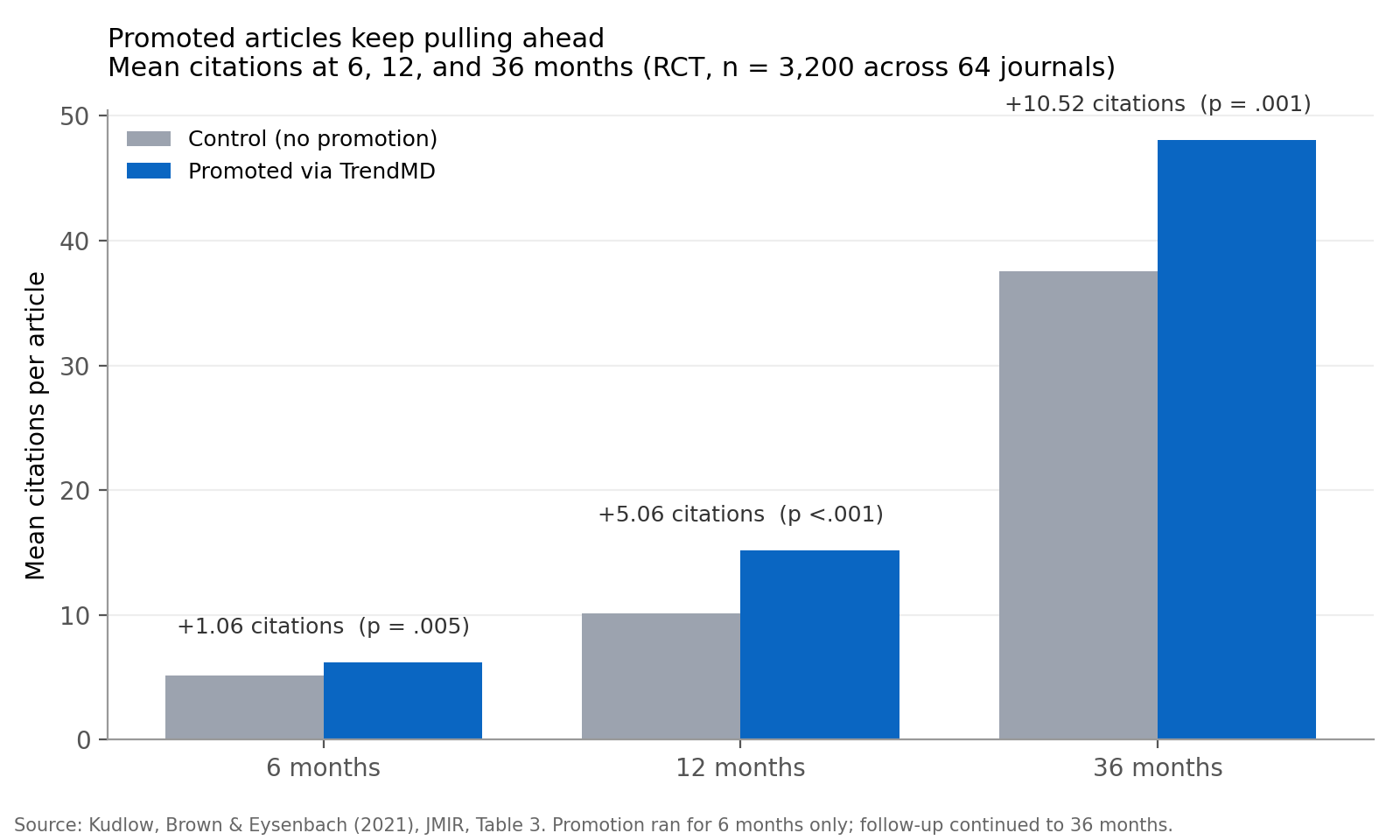
Promoted papers keep pulling ahead: what the Kudlow RCT looks like at 36 months
A randomized controlled trial (Kudlow, Brown & Eysenbach, JMIR 2021) shows six months of cheap paper promotion produced a citation gap that kept widening for three years after the promotion stopped.