We use Firebase Analytics (_ga cookies) to improve this service — you can decline and everything still works.

Free guide:“Nobody cares about your work — How academic careers actually work.”

Make your researchimpossible to overlook.

Every Monday, get a briefing telling you:

  • Who to contact
  • Why now
  • What to say

Ready-to-edit email drafts grounded in your actual research. Review, edit, send. 15 minutes a week.

Setup takes 4 minutesNothing sent without your approval

Not ready?

loudcamel · briefing №14
Briefing №14 · Monday
Three scholars, one thread
15 min
read
Scholars to email · 3
MC
Dr. M. ChenStanford · h=34
Published a methods paper last Tuesday extending the regression in your 2023 paper. Direct link to §4.
▸ Draft ready (118 words)
RO
Dr. R. OkaforLSE · h=21
Cited your 2022 paper twice in a preprint posted yesterday.
JP
Dr. J. ParkNIH · reconnection
Moved into program officer role last month. Funded two projects in your area.
Visibility action
r/
r/AskAcademia thread240 comments
Discussion on tenure portfolios. Your 2024 paper answers the question.

Good research is discovered unevenly.
Quality alone was never enough.

Most papers never reach the people who would build on them. Most invitations flow toward names the panel already recognized. The work isn't the problem. The researchers who get read, get invited, and end up where they wanted to be are doing something else too — quiet, weekly, visible work between the papers. That's the part no one teaches in grad school. It's what Loud Camel is for.

Four sections, every Monday.

Each briefing runs to ten or fifteen minutes of reading. It is built from a fresh weekly scan of your field — new papers citing your work, role moves across your network, and active discussions where your research applies.

01 / Scholars to email

Who to email, with the reason it's now.

Researchers whose recent work directly intersects with yours — surfaced with the specific paper, the specific link, and the timing reason. Not "same field." Not "you might enjoy."

ExampleDr. M. Chen (Stanford, h=34) published a methods paper last Tuesday extending the regression approach in your 2023 paper. A short email referencing §4 would land.
02 / Reconnections

Dormant contacts who became relevant again this week.

People you used to know, surfaced because something changed — a new publication, a role move, a conference. Each comes with a non-awkward reason to write, even after years of silence.

ExampleYou co-authored with Dr. J. Park in 2019. She moved into a program officer role at NIH last month and funded two projects in your area since.
03 / Visibility actions

Active discussions where your research applies.

Specific online spaces — subreddits, preprint threads, LinkedIn discussions — where a substantive contribution from you would genuinely help readers, and where AI search systems happen to index for tomorrow's citations.

Exampler/AskAcademia thread, 240 comments this week, on tenure portfolio methodology. Your 2024 paper directly answers the question being asked.
04 / Drafts

Every recommendation arrives with the email written.

In your tone, grounded in your actual papers, never generic. You edit, send, or skip. Nothing is sent automatically. Nothing is published in your name without your click.

Example"Your recent paper on protein folding directly connects to §3 of our preprint — I think there's a methodological tension worth discussing…" (118 words, editable.)

The effect is measured, replicated,
and large.

Targeted promotion of academic work changes citation outcomes. The evidence isn't subtle. Three studies, three Loud Camel mechanisms — the studies came first.

28%
more citations.
Measured effect of targeted article promotion in a randomized controlled trial of 3,200 peer-reviewed articles across 64 journals — sustained at 36 months.
Kudlow, Brown & Eysenbach
Journal of Medical Internet Research, 2021
130k
papers analyzed.
Across abstracts in Nature, Science, and PNAS, papers using promotional language received significantly more citations, more views, and more media attention.
Stavrova, Kleinberg, Evans & Ivanović
Communications Psychology, 2025
8.3m
young scientists.
Denser indirect international collaboration ties — through domestic collaborators with global connections — predicted significantly greater research productivity and prominence.
Chen, Ding, Zhao, Guo & Ning
Research Policy, 2025

You are probably one of these three.

Loud Camel adapts to where you are in your academic career. Here is what a typical month looks like for each kind of subscriber.

Early career

The network-builder

Postdoc · advanced PhD · new faculty

Your situation

You're publishing good work. The right people aren't reading it. Job-market season is coming, and your network is still your advisor's network — not yours.

A typical week

30 minutes. Two peer outreaches. One preprint comment. One guest-blog excerpt.

After three months

~10 peer relationships · stronger Google footprint · letter-writer candidates surfaced

Mid-career Most common

The quiet publisher

Assistant professor · senior postdoc · lecturer

Your situation

Your work is good. Nobody is reading it. The conference invites go to the same five established names. Yours isn't one yet.

A typical week

20 minutes on Monday. Send two emails. Post one comment. Skip the rest.

After three months

3 new citation relationships · 1 co-author conversation · name appearing in AI search

Established

The strategic reconnector

Tenured faculty · senior lecturer · post-pivot

Your situation

Your network reflects what you used to do. The lecture invitations are about the old work. The recognition in your new area isn't arriving.

A typical week

15 minutes. One reconnection note, one targeted comment, the rest waits.

After three months

Prior exposure to grant reviewers · 2–3 reactivated dormant ties, now relevant

From paste-your-ORCID to first email sent: minutes.

No software to install. No new platform to learn. The briefing arrives in your existing inbox; a fuller view sits in a private dashboard if you want it.

0
Now · 4 min

You paste your ORCID.

The system pulls your publication list, identifies your active subfields, runs the first scan.

1
Minutes later · First briefing

Scholars, reconnections, and actions.

Your first briefing lands right after setup — drafts attached to each. Review in 15 minutes. Send what fits, skip the rest. No penalty.

2
This week · Tune

You set tone and priorities.

A one-screen form: plain or formal voice, citations vs. grants, anything to exclude.

3
Every Monday · Calibrated

A fresh briefing each week, sharper.

By the third or fourth, the precision is noticeable. You're seeing what you would have missed.

One subscriber, with their numbers.

Every quote here is named and used with permission. The subscriber's numbers are a real, specific outcome — not an illustration.

This is a tool every academic should have at their side. I've used it for four months and the difference in how often my name appears in conversations I should be in is not subtle.
3 new citations · 1 grant invitation
GY
Prof. Gad Yair
Sociology · Hebrew University of Jerusalem
Most researchers assume visibility will follow from good work. It doesn't. Loud Camel is a system that finds the right people, creates a genuine reason to reach out, and keeps you in control of everything that goes out. I've seen the results firsthand. It works.
DL
Danny Lieberman, PhD
Entrepreneur & Mentor · Host, Life Sciences Today
I designed Loud Camel to do three things: find researchers whose work connects to yours, draft an opening that reads as a real research connection rather than marketing, and never send anything without your approval. It's the tool I wish I'd had as a postdoc.
BG
Boris Gorelik, PhD
Founder, Loud Camel

The questions every researcher asks. Answered plainly.

Built by a researcher
who saw this problem first.

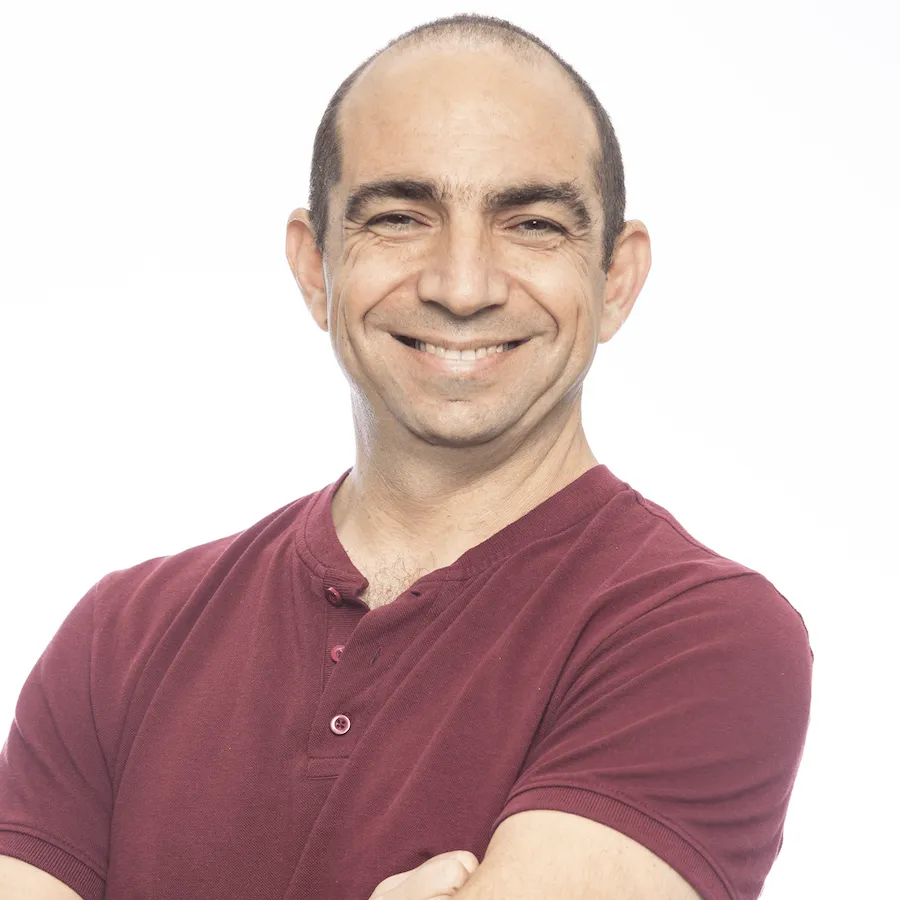
Boris Gorelik, PhD
Boris Gorelik, PhD · Founder & CEO

I'm a data scientist with a PhD in computational chemistry from the Hebrew University of Jerusalem. I've spent my career building systems that read large bodies of text and surface what matters.

Again and again, I saw the same thing: good research going undiscovered. The record was solid. The visibility wasn't. The people who needed to know the work simply didn't.

So I turned the toolkit I'd built for other people's problems onto this one — large-scale text analysis and pipelines that read what other researchers read and surface what they miss.

Most researchers face this problem. Most don't have the technical background to build their way out. Loud Camel is what they no longer have to.

I read every email personally. Write to boris@loudcamel.com.

Loud Camel vs. doing it yourself.

Loud Camel doesn't replace your ResearchGate or Academia.edu profile — those are libraries, and your work belongs in them. What Loud Camel replaces is the active outreach work most researchers end up doing by hand: between papers, between teaching, at the edges of the day.

Loud CamelDoing it yourself
Time per week5–10 hours
What you doScan new papers, identify relevant scholars, find their contact, draft each message from scratch.
What gets skippedMost weeks. Outreach is what gets cut first when everything else is on fire.
Cost per month20–40 hours of your time