Tag
academic careers
20 posts tagged academic-careers.
-
Does your PhD's pedigree decide your career more than your papers do?
A 2022 Nature study of 238,676 professors finds 80% trained at just 20% of universities, five schools produced one in eight, and only 5 to 23% ever work somewhere more prestigious than their PhD. What that means if you didn't train at an elite school.
-
What does a great mentor actually give you? (Not their topic.)
A 2020 PNAS study of nearly 40,000 scientists finds a great mentor's biggest gift is a tacit skill for creating and communicating important research, and that protégés who copy their mentor's topic do worse than those who strike out on their own.
-
Does a career grant actually stop brain drain?
A 2025 Quantitative Science Studies paper, the first to test the question, finds the Marie Curie Career Integration Grant raised long-term relocation odds by about 8 to 9%, mostly for researchers with the fewest other options.
-
The narrative CV that stands out: what funders actually read
More funders now ask for a narrative CV instead of a publication list. The official guidance tells you the four boxes to fill. Here is how to make each one land with specific evidence.
-
A reviewer looks you up before they score you. What do they find?
Grant and fellowship reviewers look you up mid-review. Run this pre-submission visibility check: does your best work surface for their query, is your Scholar profile disambiguated, and does your own page block the AI they ask?
-
Does crossing fields make your paper more disruptive, or just harder?
A 2025 Journal of Information Science study of 38 million papers finds interdisciplinary work links to higher disruptive potential on average, even as disruption fell while interdisciplinarity rose, with an uneven payoff across fields.
-
Is the 'world's top 2% scientists' list measuring merit or geography?
A 2025 Journal of Informetrics study of Stanford's 'World's Top 2% Scientists' list in legal studies finds it tracks a US postal code about as closely as it tracks merit.
-
Is your hot streak also your most disruptive streak?
A 2025 study of 21,271 economists finds papers published during a researcher's hot streak are also more disruptive, and the boldest work tends to arrive years before the most-cited work.
-
Small teams disrupt? Maybe it was never about size
A new arXiv preprint argues that collaboration synergy, not team size, drives disruptive science, revisiting the well-known 'small teams disrupt, large teams develop' finding.
-
Is science really running out of disruption?
A 2026 Research Policy paper argues the famous 'science is becoming less disruptive' finding measures the wrong thing, especially in the social sciences.
-
How Visibility Affects Grant Funding
Understand the direct link between research visibility and grants. Learn how review panels evaluate digital footprints to allocate funding.
-
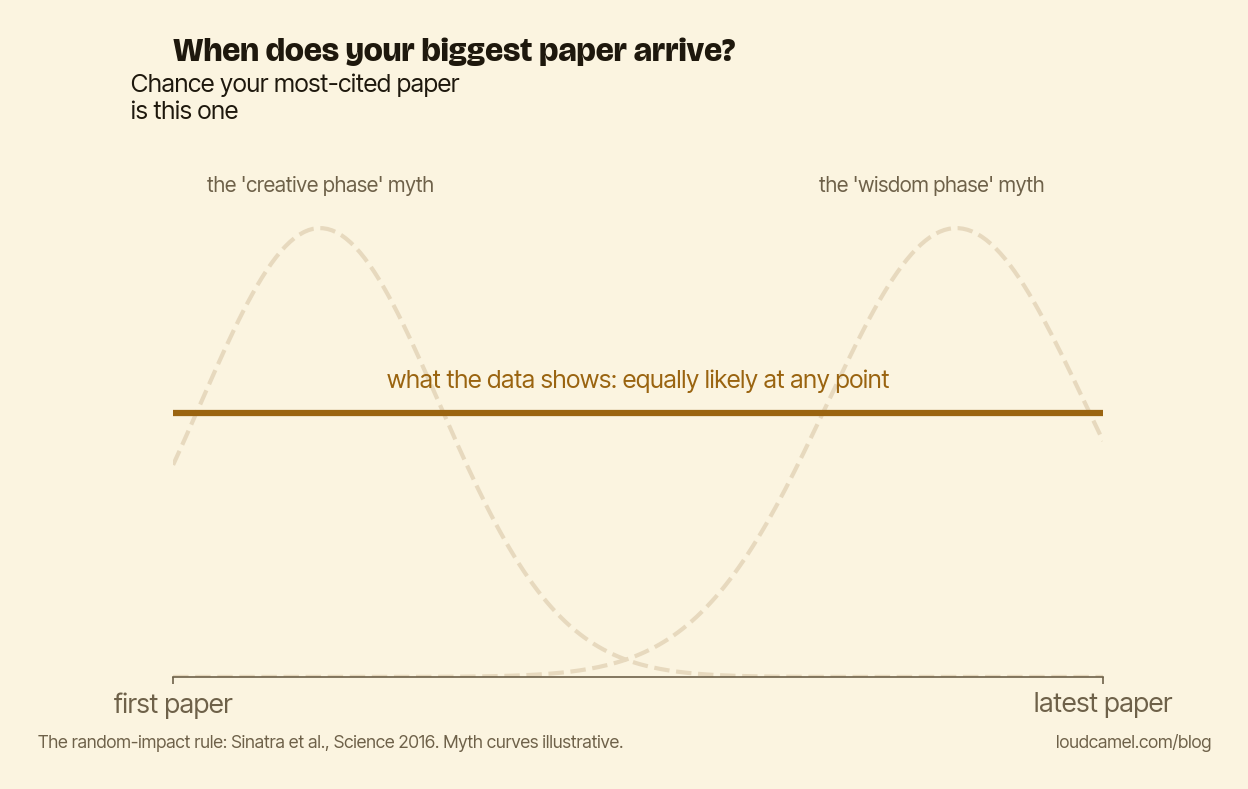
Why your biggest paper hasn't happened yet
The single biggest paper of a scientific career lands at a random point in it, and the only requirement is that you were still publishing when it arrived. Here is why that means you should not quit.
-
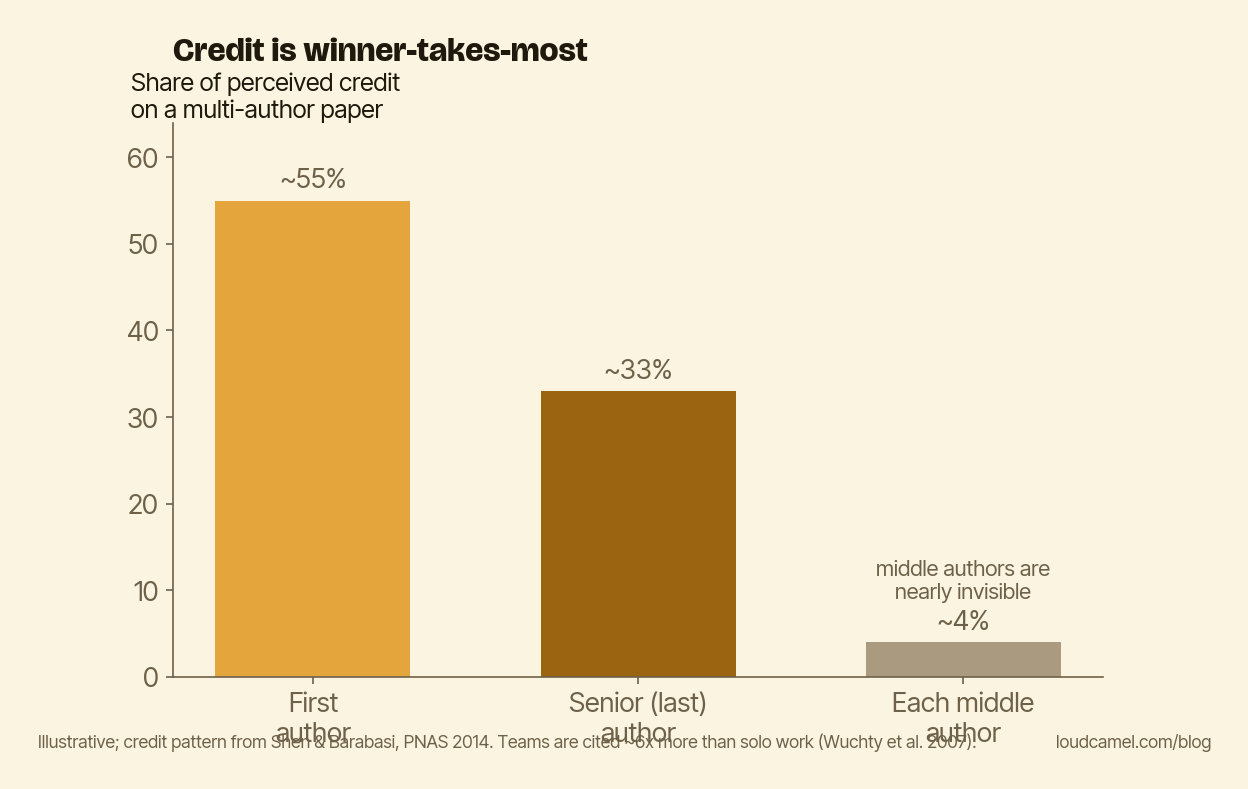
The credit problem in team science
Teams produce most of the research impact, but one author takes most of the credit. If you are a middle author, the publication itself will not make your contribution visible. Here is what to do about it.
-
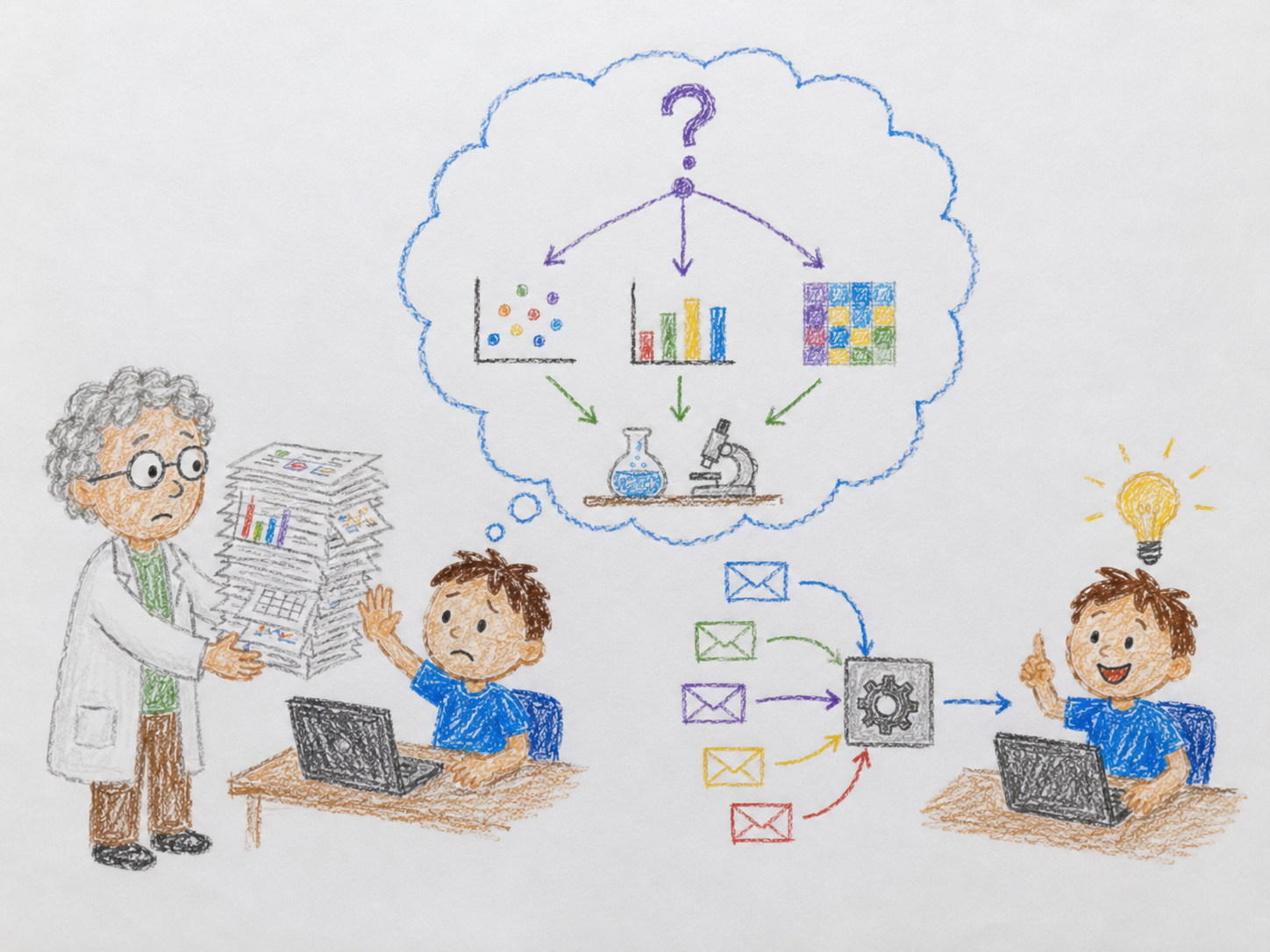
Stop telling me what to do. Tell me what you want to know.
Most research-visibility work changes nothing. A six-year analysis that ended in one question, and how to tell which visibility tasks are worth doing.
-
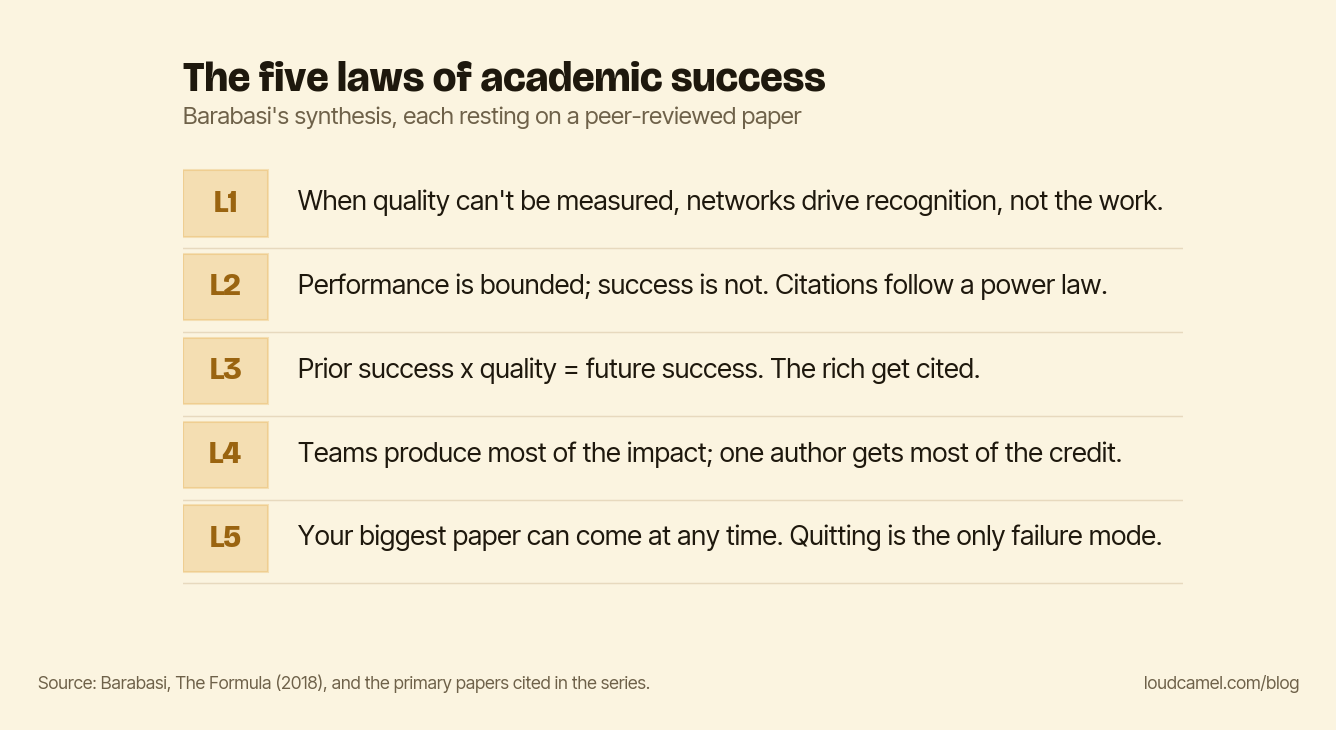
How academic careers actually work
Nobody trains you for the half of academic work that decides your career: making sure the right people know your work exists. Here is why that is a feature of the system, not a bug, and the fourth way to respond to it.
-
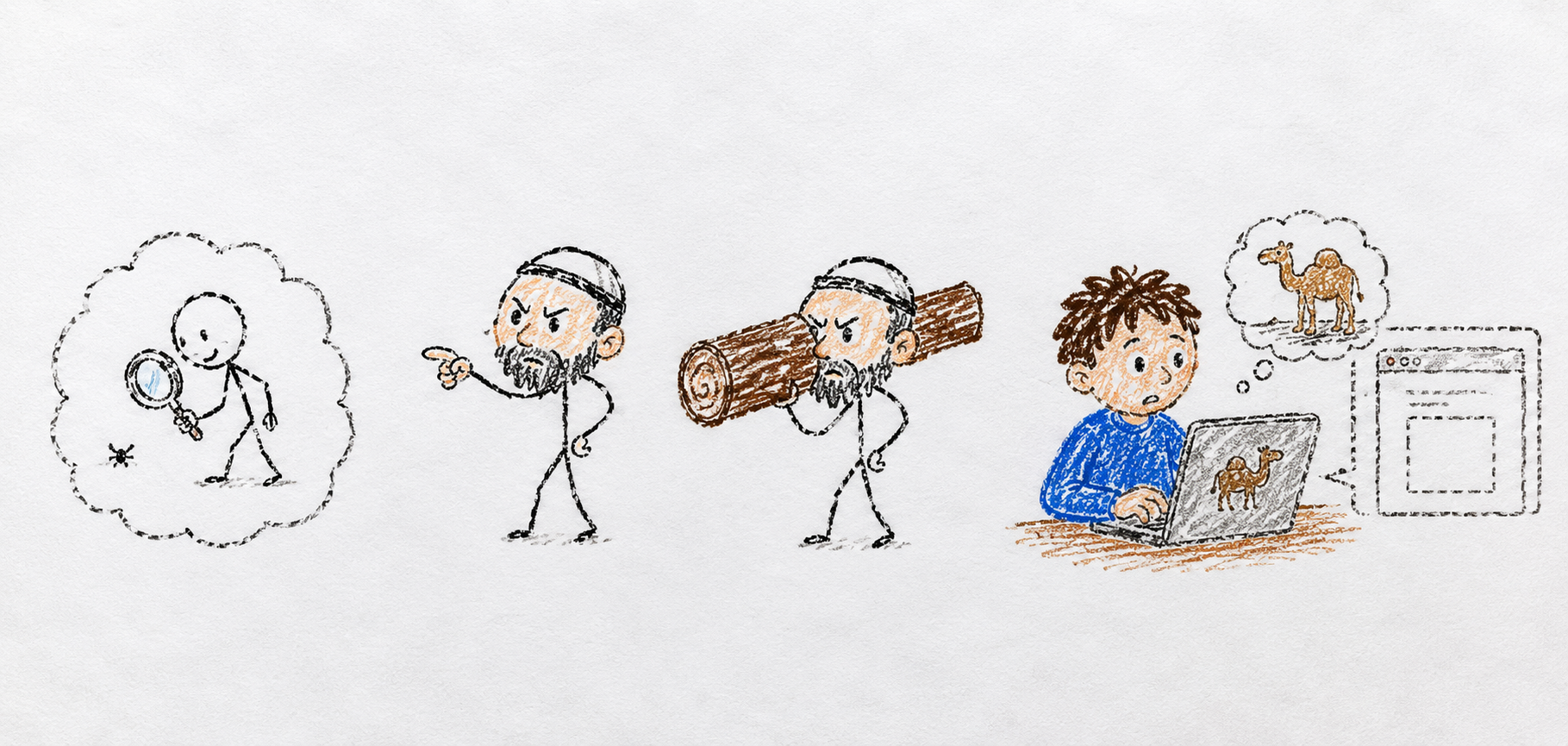
Your worst blind spot is the thing you are best at
Your worst blind spot hides in the skill you are most expert at. A layoff, a Talmudic line about the beam in your own eye, and how to go looking for what you cannot see.
-

She could've been Erdős-1, but she was shy
She turned down a paper with Paul Erdős because she was too shy. On the gender gap in self-promotion, why visibility is part of the job, and how to leave a trail without bragging.
-
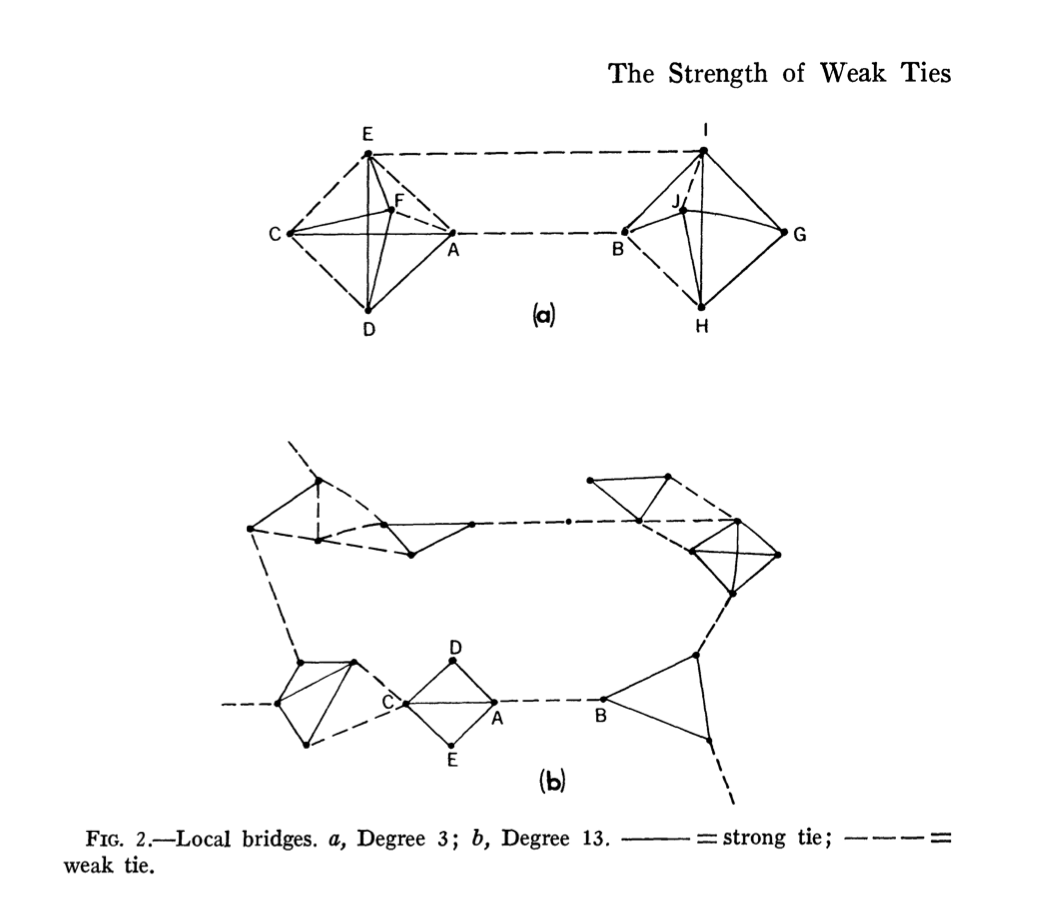
Why your acquaintances, not your closest friends, bring you the next opportunity
Granovetter's 'strength of weak ties': most useful job leads come from acquaintances you see rarely, not your closest circle. How to put yourself near the next opportunity.
-
An Illustrated Guide to Academic Publishing
An illustrated story of how a paper is born — and why, among five million papers a year, most are read by almost no one. The problem is rarely quality; it is visibility.
-
Where you debut probably decides where you stay
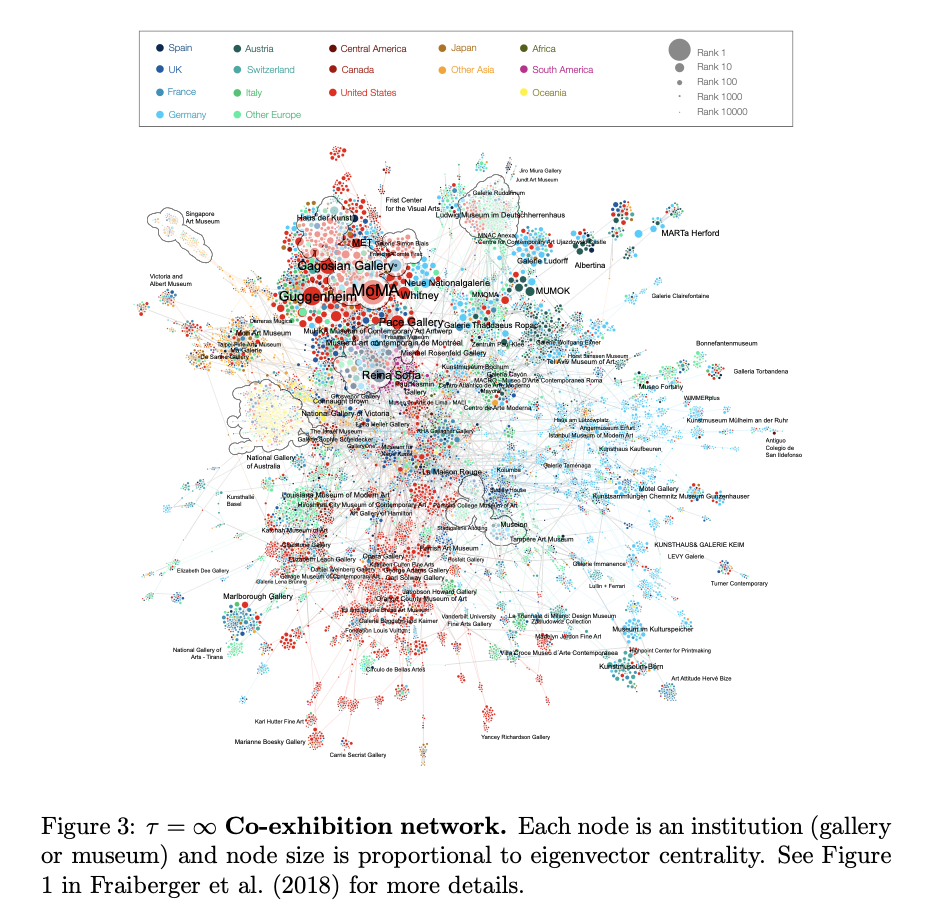
A network study of nearly 500,000 artists shows the first five exhibitions predict the next thirty. The same gatekeeper dynamics shape any institutional career — choose your first move carefully.