
Three reasons researchers stay invisible
Good research often goes unread, and the reason is rarely quality. When you ask researchers why they do not work on getting their work seen, the answer is almost always one of three. This is an evidence-based series, one set of posts per objection.
1. “Good work speaks for itself”
The belief that quality finds its own audience. The evidence says recognition is a networked, cumulative-advantage process: attention concentrates on what is already visible, early signal compounds, and discovery increasingly runs through AI systems that can only surface what they can parse.
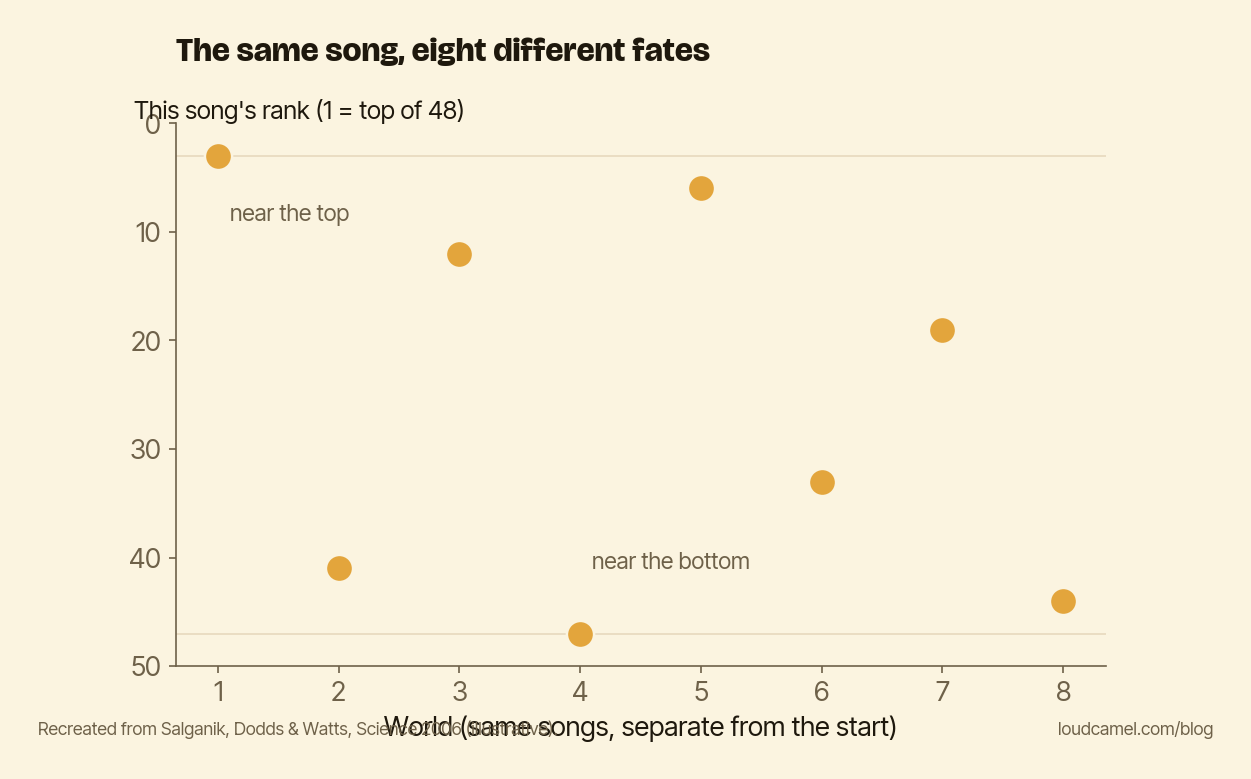
Same song, different universe: what a music experiment says about your citations
A 2006 music experiment ran the same songs through eight parallel worlds. The same track was a hit in one and a flop in another. Here is what that says about why some papers get cited and others vanish.
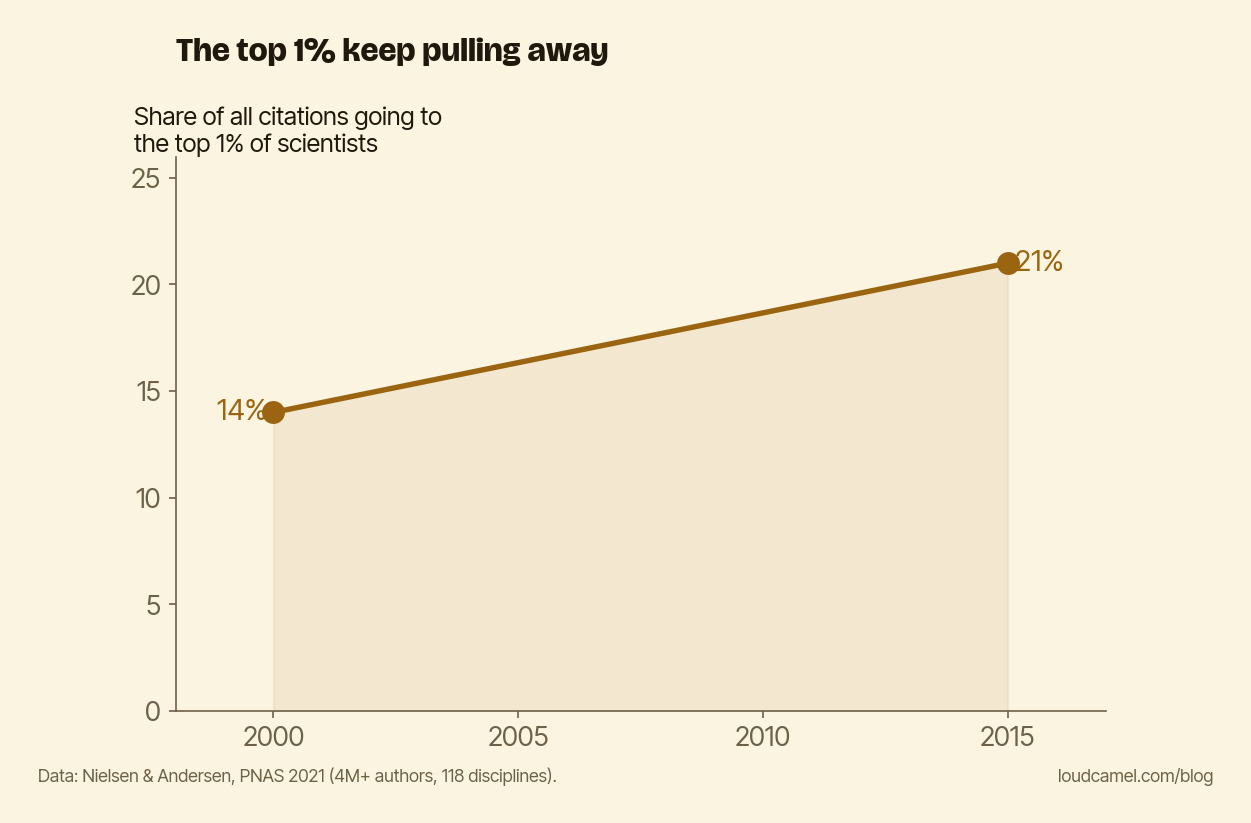
Citation inequality is widening, which is why 'above average' isn't the target
By 2015 the top 1% of scientists captured 21% of all citations, up from 14% in 2000. As attention concentrates, being good enough guarantees nothing. Here is why deliberate visibility matters more every year.
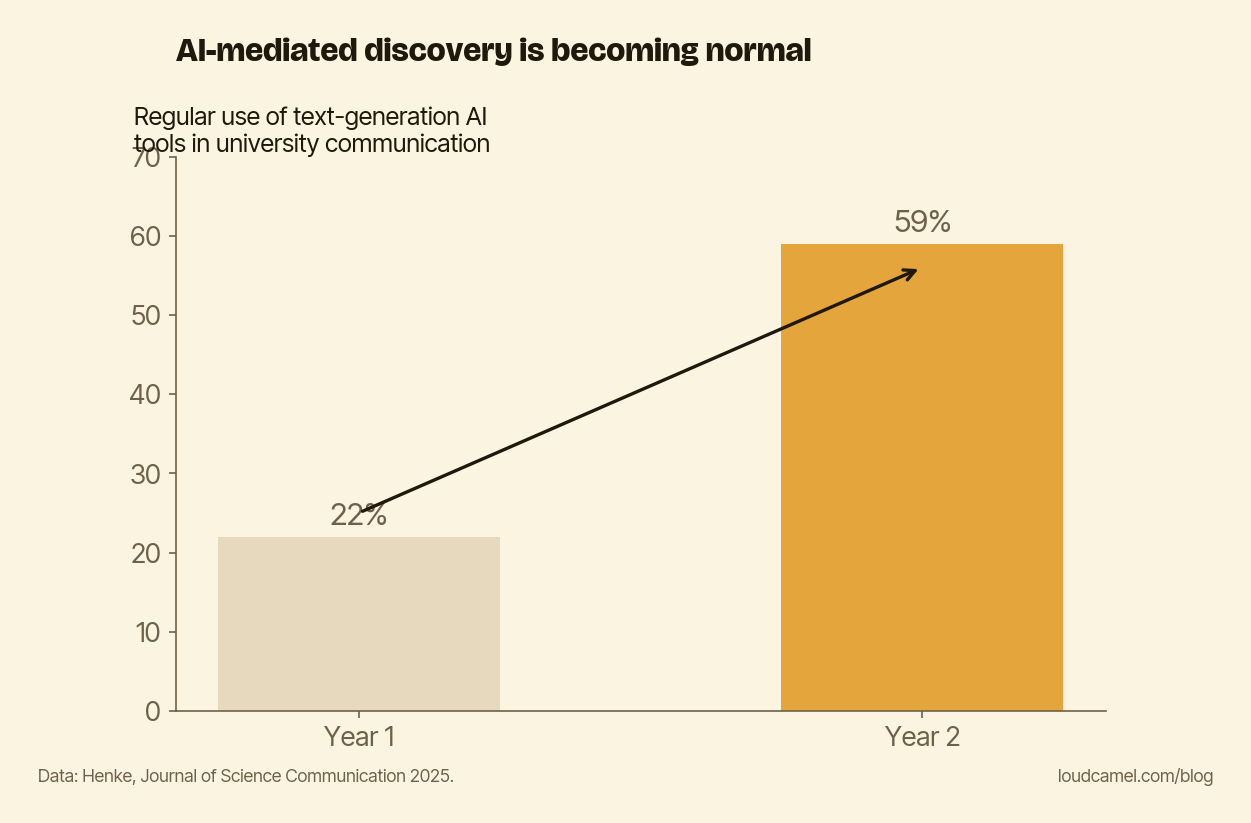
What AI search actually sees when it looks for your work
Discovery is shifting to AI assistants that can only surface text they can parse. Here is how to check whether your research shows up, and how to fix it if it doesn't.
2. “Self-promotion is fake”
The worry that making your work visible is vanity. The reframe: visibility is not the same as self-promotion. Making rigorous work findable by the people who need it is a service to the field, and the most effective version of it does not look like bragging at all.
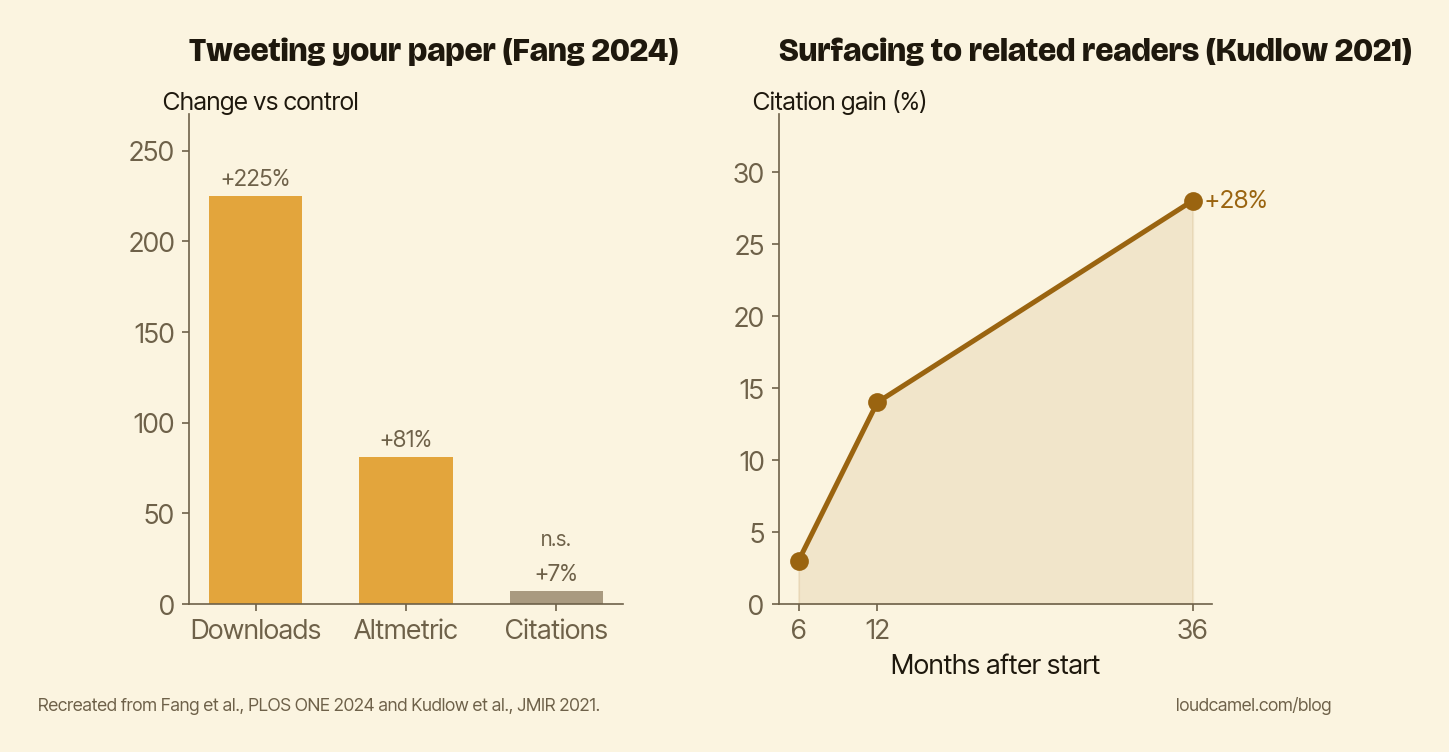
Findability isn't spray-tweeting: the honest case for promoting your work
A 2024 randomized trial showed that tweeting your paper buys downloads, not citations. So here is the honest version of the case for promotion: be findable, don't broadcast.
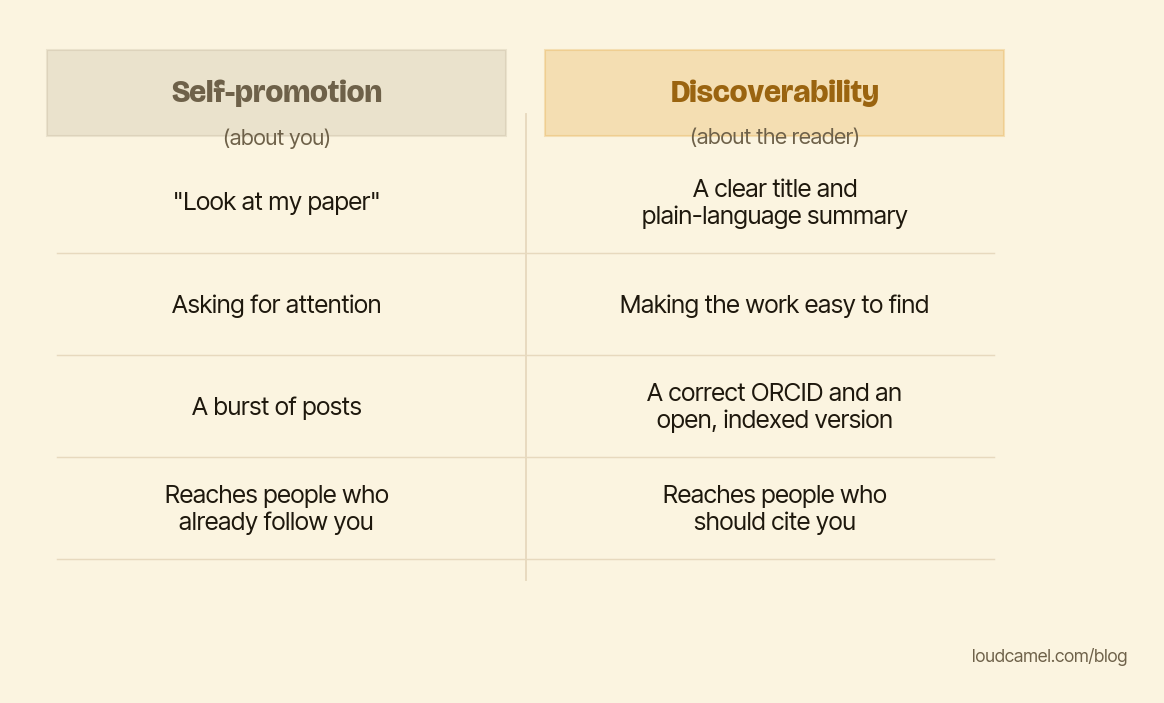
The most effective visibility work doesn't look like self-promotion
If self-promotion feels gauche to you, good news: the highest-payoff visibility work isn't self-promotion at all. It's discoverability infrastructure, aimed at the reader, and you can do all of it without ever bragging.
3. “I’ll handle visibility myself”
The plan to do it manually, when there is time. The problem is what that costs: attention fades within days, deposited work is not automatically found, intention rarely converts to action, and the platforms keep moving. A recurring, low-effort system beats sporadic manual effort.
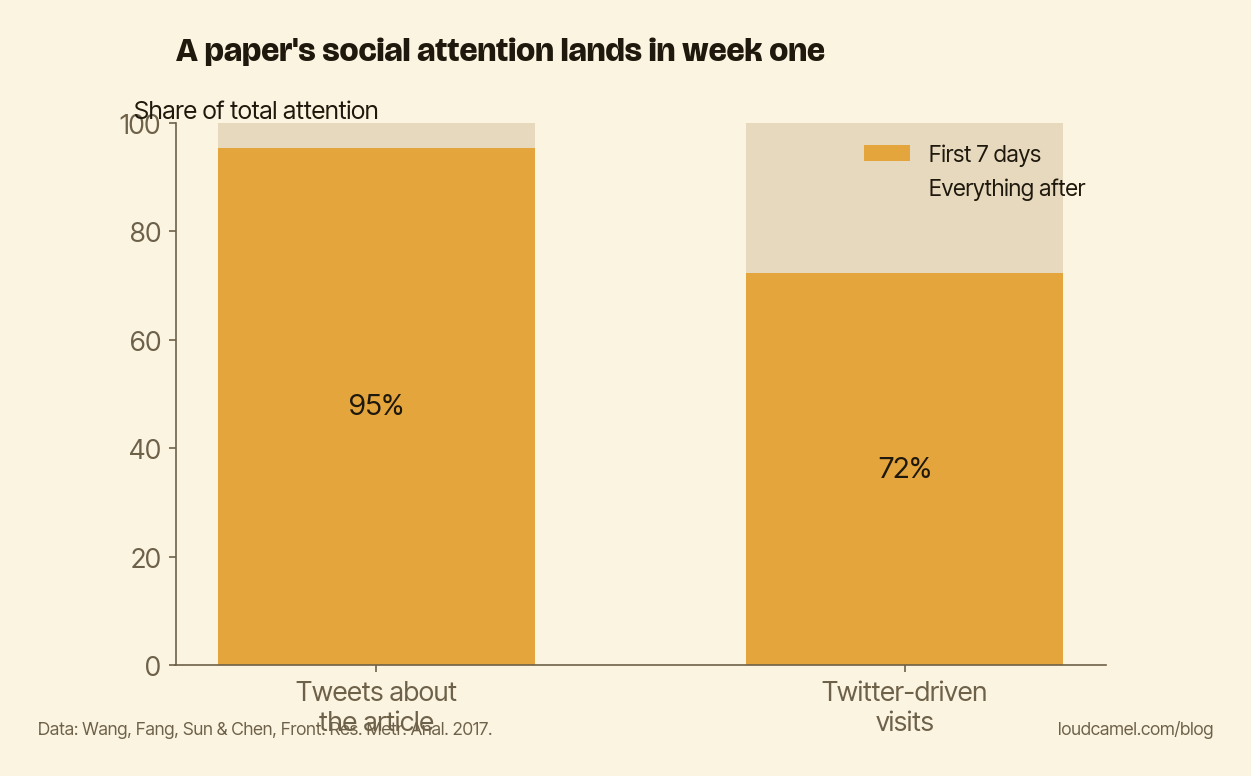
Your one-week spike: why posting once doesn't keep your work visible
95% of the tweets about a paper happen in its first seven days. A single launch post is a one-week event, not a strategy. Here is what to do instead.
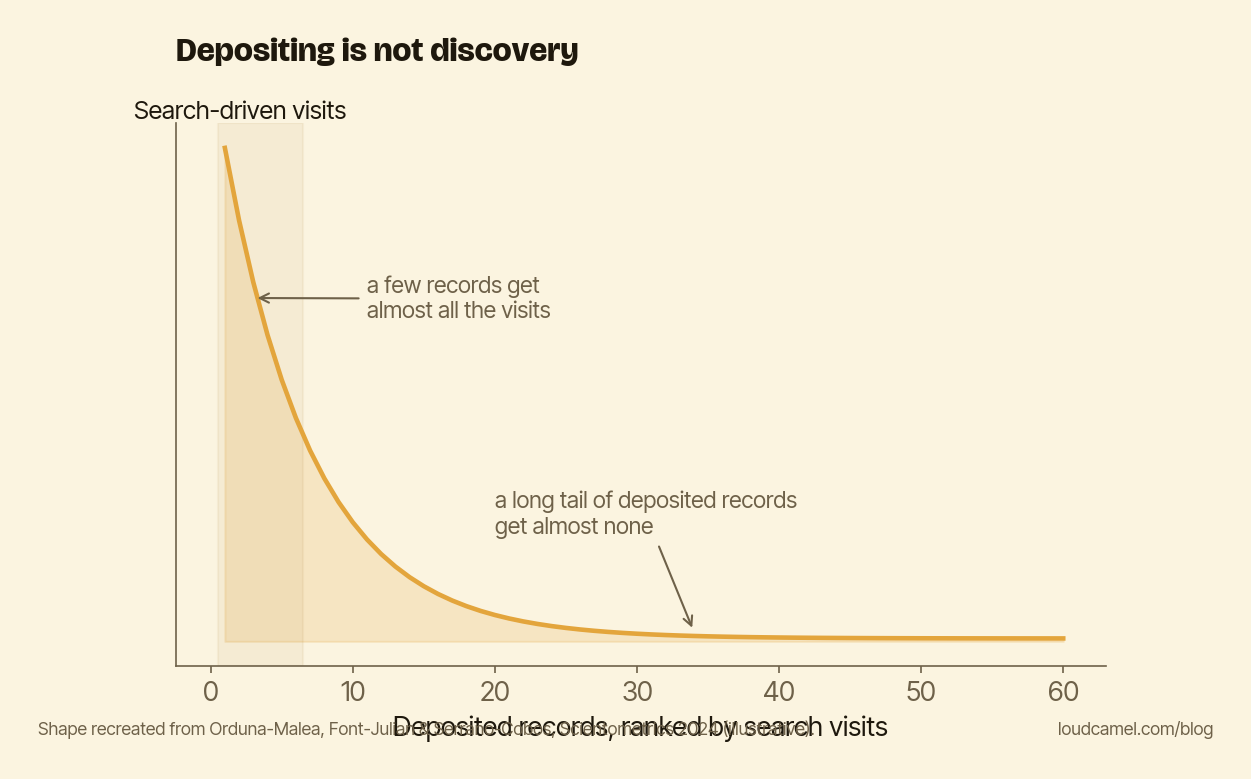
Deposit it and they will not come: open access isn't the same as discovery
A study of 217,589 repository records found that visits are brutally skewed: a few records get almost everything, most get almost nothing. Uploading is necessary. It is nowhere near sufficient.
Your research posts shouldn't sound like everyone else's: meet Content Studio
Most AI writing tools produce generic, findable-by-nobody text in a voice that isn't yours. Content Studio learns your writing, anchors on your takeaways, and ships every format in one run.
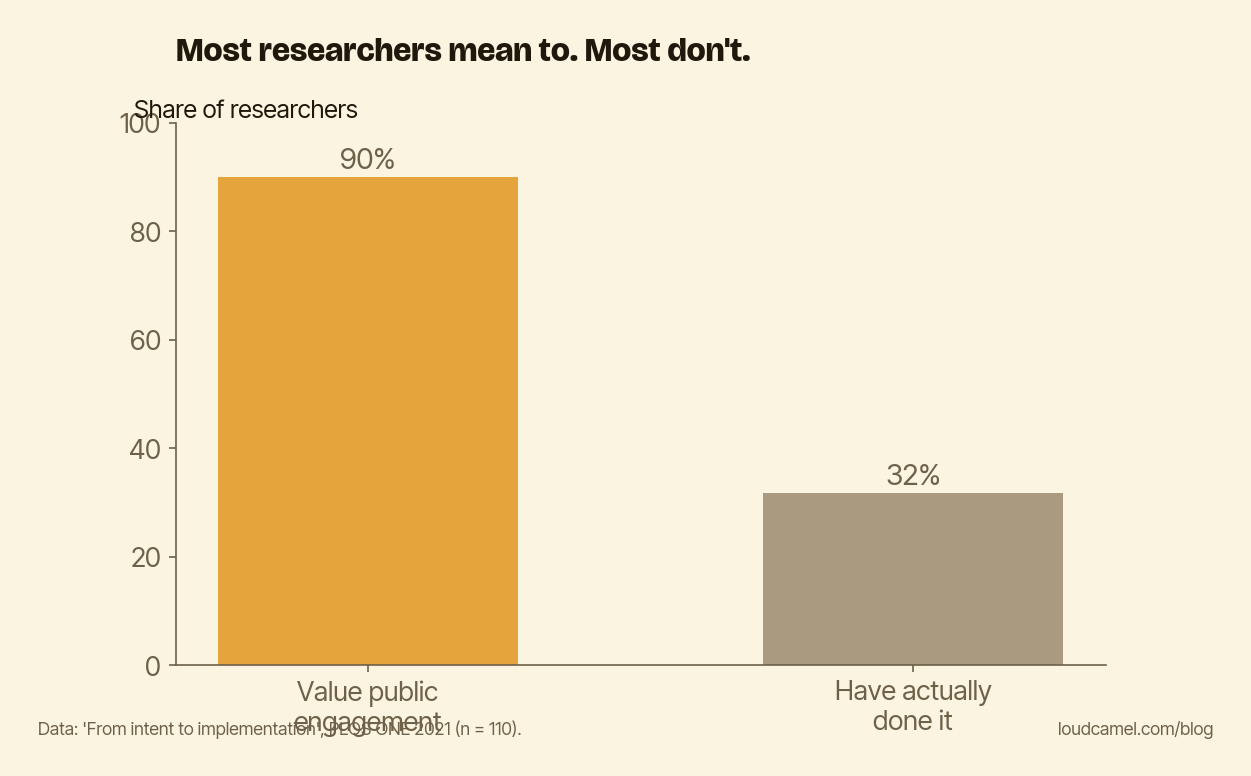
You mean to, and you won't: the intention gap in research visibility
About 90% of researchers value public engagement. About 32% actually do it. The gap isn't willpower, it's the lack of a recurring prompt. Here is the fix.
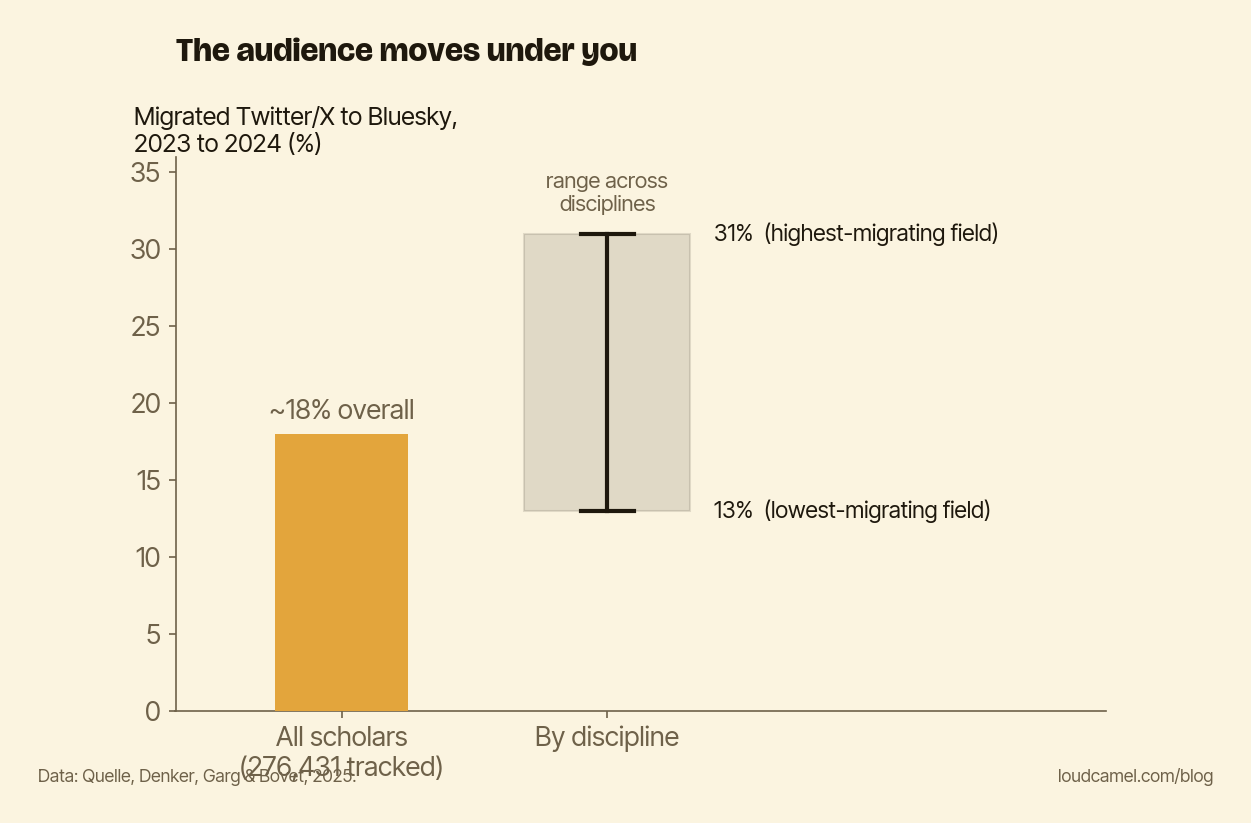
The ground keeps moving: why visibility is maintenance, not a project
A perfect one-time visibility setup still decays, because the platforms that carry your audience keep moving. New data on 276,431 scholars shows how fast the ground shifts, and what to do about it.
This series comes from Loud Camel, which helps researchers make their work findable by the people and machines that decide citations, reviews, and funding.